

Power first strategy: How KKR, Blackrock are helping CyrusOne conquer market share one market at a time
Having recently joined CyrusOne in June of last year, what attracted you to the company at this moment of its evolution? What drew me to ...
Having recently joined CyrusOne in June of last year, what attracted you to the company at this moment of its evolution? What drew me to ...

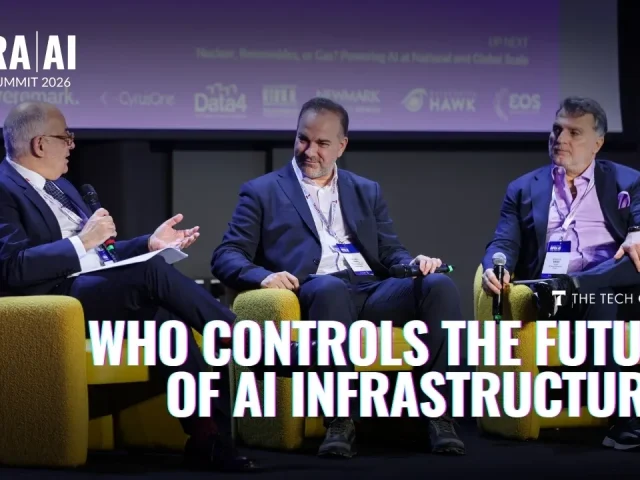
 InfraAI’26: National Security vs Innovation: Who Controls the Future of AI Infrastructure?
This panel session examined the growing tension b...
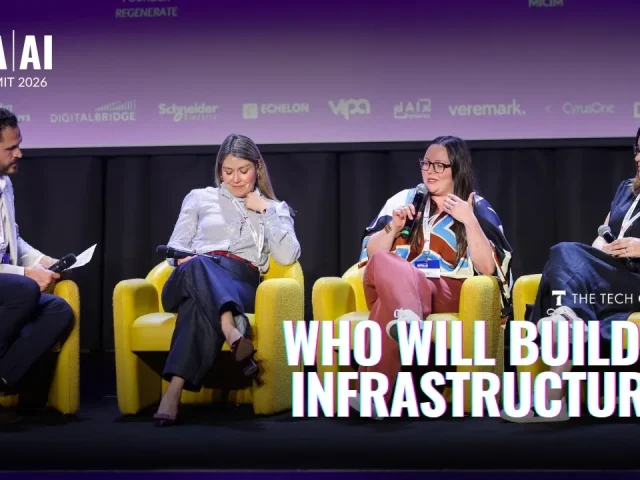 InfraAI’26: Who Will Build AI Infrastructure? The Talent and Pressure Challenge
This panel explored the human challenges behind t...
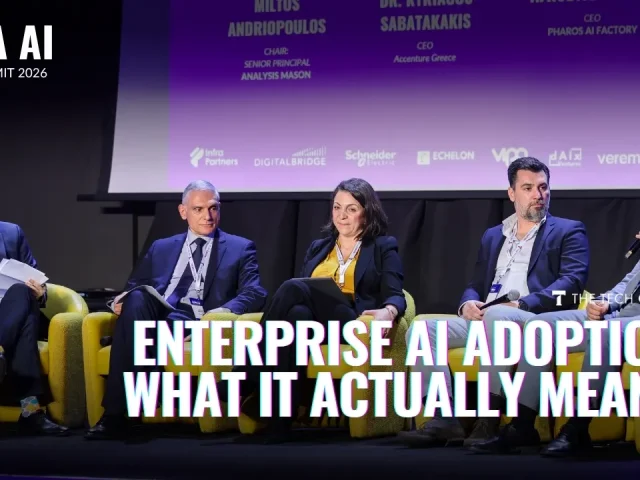 InfraAI’26: Enterprise AI Adoption: What It Actually Means for Data Centre Demand and AI Clouds
This panel examined how enterprise adoption of AI...
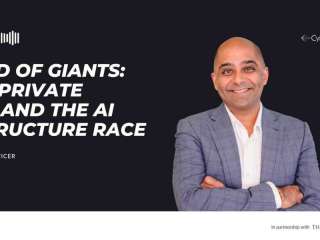

 Ep. 38 - The Land of Giants: Power, Private Capital and the AI Infrastructure Race, with Krupal Raval
In this episode of Great Business Minds, ...
 Ep. 34 - Inside the high-stakes race to keep Europe’s data at home, with Olivier Micheli
At the Datacloud Global Congress 2025 in Cann...
 Ep. 32 – From Dotcom to AI: Building Japan’s and the World’s Digital Infrastructure Gardens with Dan Kesler and Bill Schrader – Great Business Minds
Welcome to another episode of the Great Business ...
Five years ago today, The Tech Capital published its first story. At the time, I had absolutely no idea whether there would be a second....
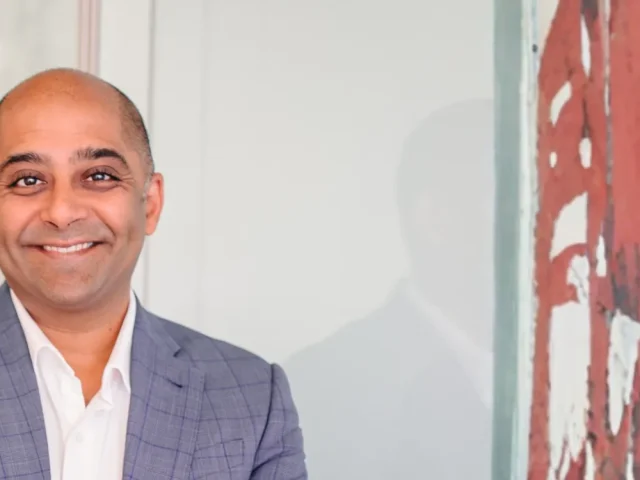
Krupal Raval, executive vice president and chief strategy officer at CyrusOne. Photo: CyrusOne
Krupal Raval, executive vice president and chief strategy officer at CyrusOne, discusses how power availability, AI-driven demand and long-term capital backing from KKR and Blackrock global infrastructure partners are shaping the company’s strategy and the future trajectory of the data Centre sector.
Founder and Editor, The Tech Capital
10 Mins
{{formattedDate}}
Having recently joined CyrusOne in June of last year, what attracted you to the company at this moment of its evolution?
What drew me to CyrusOne is its exceptional foundation with a global footprint, a strong customer base, a reputation for operational excellence, and incredible sponsors. With this, I believe CyrusOne is better equipped than any to deliver during this AI driven inflection point.
Having KKR and BlackRock GIP as sponsors isn’t just about capital availability, it’s a signal of strategic intent. That level of institutional backing, combined with the discipline and long-term orientation those relationships bring, creates a platform with real competitive differentiation. We can pursue growth with conviction, whether that means entering new geographies, deepening customer relationships, or positioning ourselves ahead of demand curves that others are still trying to model.
This private structure allows us to make decisions on a longer timeline that reflects the complexity of infrastructure development, not quarterly earnings cycles. This is a meaningful advantage when you’re driving capital-intensive, multi-year strategies that create durable value.
None of that matters without the right leadership. Eric has built something genuinely rare here a senior team with the operational depth and the strategic imagination to match the ambition of the opportunity. When you see that combination of capital, structure, and talent converge at the same moment, it’s not a difficult decision to be here.
How does the company’s overall strategy reflect where you believe the data centre market is heading, particularly as demand accelerates?
Power is the cornerstone of our strategy. It is the binding constraint right now, determining where we can build and our ability to make credible commitments to our customers. Securing energy capacity proactively and thinking carefully about how we access and manage that capacity sustainably, is what gives us the confidence to move decisively when the right opportunities emerge.
From there, the strategy compounds. A deep capital base means we’re not forced into reactive decisions, and pursue the right sites in the right markets, structured in ways that create long-term value. We can get ahead of supply chain constraints and invest in talent across every function. What ties it together is a deliberate focus on creating meaningful strategic partnerships to enable smart investments to lead, rather than chase, when demand accelerates.
You’ve spent much of your career navigating major shifts in the data centre industry. From your perspective, what are the most significant changes shaping the sector today – and how do you see these evolving over the next five to ten years?
What we’re navigating through now is a genuinely structural rather than cyclical change at a magnitude I don’t think anyone fully anticipated even three years ago.
Power is the headline constraint, but we shouldn’t overlook what’s driving this so acutely. This is the convergence of AI at scale with the physical state of current energy infrastructure that was never designed to absorb demand of this size, at this pace. We’re asking decades-old grid architecture to accommodate an exponential technological shift, and that tension will define the industry’s trajectory for the next decade.
AI is changing the nature of what our infrastructure needs to do. It requires high-density compute, thermal management, and latency sensitivity. The data centre of 2030 will look meaningfully different from todays, and the companies building now must make decisions with that in mind.
The emergence and rapid scaling of neoclouds is the development that I think is underappreciated. At CyrusOne we are thoughtfully incorporating neocloud partnerships into our broader business model. Our strong base of high investment-grade customers provides the foundation to engage neocloud players responsibly, allocating a small, strategic portion of the portfolio to early-stage innovators without taking on undue risk.
You mentioned AI. What are the biggest misconceptions in the market about AI data centre demand?
One of the most pervasive misconceptions is that data centres are straining the grid and, by extension, driving up household bills and impeding the energy transition. The reality is that the scale of capital flowing into this industry is accelerating investment in renewables, nuclear, and next-generation energy infrastructure. Data centres are becoming some of the most significant drivers of clean energy development globally, because it’s operationally and commercially rational. That’s a fundamentally different story than the one often being told.
The second misconception is more technical but equally consequential: the assumption that AI demand is simply more of the same demand. It isn’t. AI workloads require a different class of infrastructure entirely. That’s why we developed Intelliscale™ as a genuine engineering response to requirements that existing data centre designs weren’t built to meet. The gap between AI-capable and AI-ready infrastructure is wider than most appreciate, and it’s creating real differentiation in the market.
The third is about the distribution of demand. There’s a tendency to frame AI infrastructure as a hyperscaler story with a handful of very large players driving the majority of growth. That was perhaps true eighteen months ago. It isn’t today. Enterprise adoption is accelerating, neocloud players are scaling rapidly, and the demand profile is broadening in ways that require a fundamentally different approach to capacity planning and geographic strategy.
Underpinning all of it is the question of stewardship. A power-first strategy isn’t simply about securing capacity, it’s about a commitment to ensuring that this generation of infrastructure is cleaner and more efficient than the last.
Capital continues to flow into data centres at record levels. What investment and capital market trends are you watching most closely?
We will see the industry entering an unprecedented, capital-intensive growth phase, requiring hundreds of billions, potentially reaching into the trillions over the coming decade in new infrastructure to meet explosive AI and cloud demand. Hyperscalers are extraordinarily sophisticated capital allocators, and as the execution complexity intensifies, I expect them to consolidate around a smaller set of deeply integrated partners that have the capability to support the scale, capital and execution that is necessary to keep pace with the level of growth.
Geographically, the centre of gravity remains in the US in the near term, and for good reason, the combination of demand concentration and relative power availability creates conditions that are difficult to replicate elsewhere at speed. But that balance will shift. Europe is catching up, driven by a combination of sovereign digital infrastructure priorities, enterprise demand maturation, and improving energy frameworks.
What differentiates CyrusOne’s approach to leadership and execution in a capital-intensive, fast-moving environment like data centres?
It is our ability to execute at scale without compromising on speed or efficiency. We recognise that power is one of the most significant constraints facing the industry, which is why we lead with a power-centred strategy, securing long-term energy partnerships early, including nuclear with Constellation and thermal generation with Calpine and Vistra. This approach gives customers the confidence that projects will be delivered on time and in a genuinely sustainable way.
How does CyrusOne balance near-term market opportunities with longer-term vision, especially given the pace of technological and regulatory change?
At any given time, we are managing multiple opportunities that could be a top priority, so we are highly deliberate about where we deploy capital and people. In the near term, decisions are anchored in customer requirements rather than speculative market entry, an approach that allows us to move with conviction where conditions are right, while avoiding unnecessary execution risk.
Over the longer term, our decisions are guided by where technology, power infrastructure, and the regulatory environment are heading, whether that’s the gigawatt-scale growth trajectory in the US or Europe’s accelerating focus on renewables and evolving data governance frameworks. The discipline to hold both time horizons simultaneously, without sacrificing one for the other, is central to how we think about building a truly durable platform.
If you had to describe your vision for CyrusOne’s trajectory over the next 3-5 years in one sentence, what would it be?
Our vision is to be the world’s most trusted, power-first data centre partner enabling our digital society and supporting the AI revolution – providing sustainable infrastructure at scale while cultivating exceptional teams to drive and execute this strategy over the long term.

Founder and Editor, The Tech Capital
14 Mins|June 14, 2026

4 Mins|June 12, 2026
3 Mins|June 12, 2026
 CyrusOne secures $8 billion financing boost as expansion plans gather pace
CyrusOne has announced an increase in its revolving credit facility and U.S. term loan, bringing to...
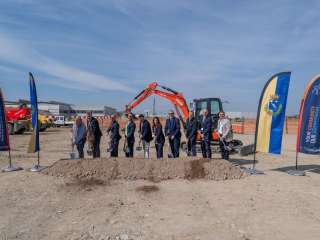 CyrusOne breaks ground on first Milan data centre
CyrusOne has begun construction of its first data centre in Italy, which is its first entry into th...
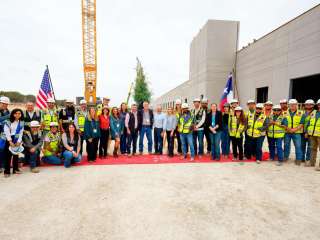 CyrusOne completes construction milestone at Texas data centre development
CyrusOne has marked a construction milestone at its new campus in Bosque County, Texas with the top...
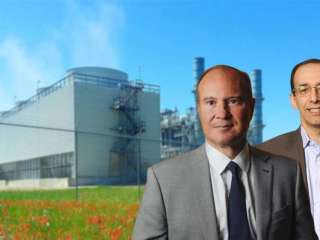 CyrusOne grows Texan energy contracts to 1.1GW with fresh Constellation deal
Global data centre developer CyrusOne has inked a new deal with Constellation Energy’s Calpine bu...
 CyrusOne appoints new chief business officer
Digital infrastructure operator CyrusOne (NASDAQ: CONE) has appointed Robert Johnson as its chief b...
 CyrusOne and Eolian plan Texas data centre campus using existing grid infrastructure
CyrusOne (NASDAQ: CONE) and Eolian, L.P. have announced a joint infrastructure deployment for a new...

Sign up for The Tech Capital's newsletters. Be the first to know and get our most compelling stories delivered straight to your inbox.