


Stability on the surface - Growth holds steady as the global economic order realigns
For much of the past year, the global economy has defied expectations. Interest rates remain elevated relative to the ultra-low er...
For much of the past year, the global economy has defied expectations. Interest rates remain elevated relative to the ultra-low er...


 Data4 CEO warns AI demand surge is outpacing data centre capacity as industry struggles to keep up
In this interview from Paris, Olivier Micheli, pr...
 InfraAI’26: National Security vs Innovation: Who Controls the Future of AI Infrastructure?
This panel session examined the growing tension b...
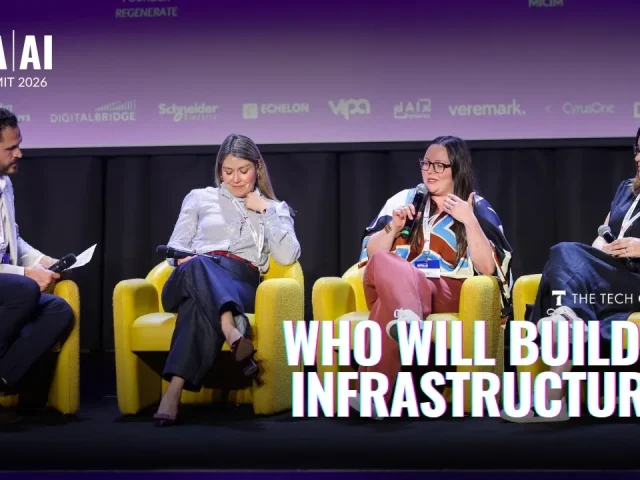 InfraAI’26: Who Will Build AI Infrastructure? The Talent and Pressure Challenge
This panel explored the human challenges behind t...


 Ep. 38 - The Land of Giants: Power, Private Capital and the AI Infrastructure Race, with Krupal Raval
In this episode of Great Business Minds, ...
 Ep. 34 - Inside the high-stakes race to keep Europe’s data at home, with Olivier Micheli
At the Datacloud Global Congress 2025 in Cann...
 Ep. 32 – From Dotcom to AI: Building Japan’s and the World’s Digital Infrastructure Gardens with Dan Kesler and Bill Schrader – Great Business Minds
Welcome to another episode of the Great Business ...
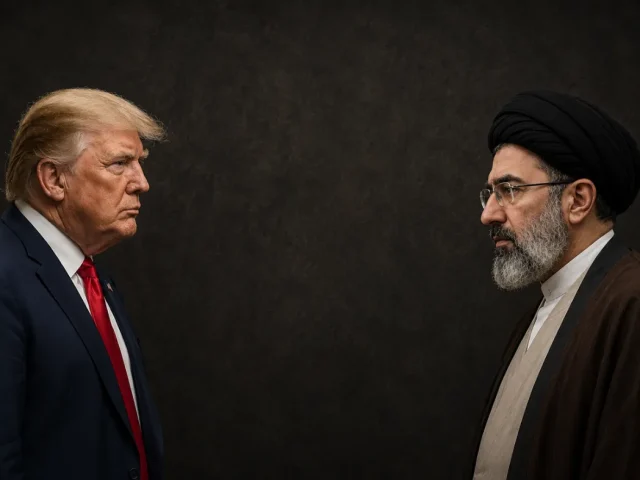
The agreement between the United States and Iran to end hostilities and reopen the Strait of Hormuz has largely been viewed through the len...
Claude Monet’s Impression, Sunrise (1872) depicts an industrial port emerging through morning haze - a quiet transition from one economic era to another.
Global output is forecast to expand by 3.3% in 2026, inflation is easing and financial markets remain functional. Yet rising state intervention, trade fragmentation and strategic competition are reshaping how capital is deployed across critical sectors. João Marques Lima examines the structural forces beneath the headline numbers.
8 Mins
{{formattedDate}}
For much of the past year, the global economy has defied expectations.
Interest rates remain elevated relative to the ultra-low era that followed the global financial crisis. Public debt levels are historically high. Trade tensions persist between major powers. Regional conflicts continue to disrupt energy and shipping corridors. And yet, global output continues to expand.
On the surface, the system appears resilient.
The International Monetary Fund projects global growth of 3.3% in 2026, broadly in line with 2025, with inflation continuing to moderate across advanced economies. Headline inflation in many developed markets has declined significantly from its 2022 peaks, and financial conditions, while tighter than pre-pandemic levels, remain far from crisis territory. Equity markets have absorbed repeated geopolitical shocks without systemic dislocation.
But stability should not be mistaken for equilibrium.
Beneath the aggregate numbers, the underlying architecture of the global economy is undergoing structural adjustment: one characterised by renewed state intervention, trade realignment and intensified competition over critical resources and technologies.
The Return of Strategic Economics
The post-Cold War era was defined by liberalisation, deregulation and cross-border capital mobility. That model is no longer uncontested.
In its 2026 Geostrategic Outlook, EY notes a sustained rise in state interventionism since 2018, including export controls, foreign investment screening mechanisms and targeted industrial subsidies. Government measures affecting cross-border trade and investment have increased markedly over the past five years, reflecting a shift from efficiency-led globalisation toward strategic economics.
The United States has expanded semiconductor incentives and energy subsidies – although to which generation resources has depended on the President at the time.
China continues to deploy state-backed capital into advanced manufacturing and technology. The European Union has advanced its strategic autonomy agenda through regulatory frameworks and industrial policy initiatives. These moves are not episodic; they reflect a structural recalibration of how governments view critical industries.
The US-China dynamic remains central. Export restrictions on advanced chips, outbound investment controls and competing standards regimes have transformed technology supply chains into geopolitical instruments. Yet the emerging landscape is not purely bipolar. EY describes a world increasingly organised into “spheres of engagement,” where countries align selectively based on trade, security and capital interests.
This realignment does not imply a collapse in global trade volumes. Rather, it suggests a redirection of flows toward politically aligned partners and strategic sectors. Capital is becoming more conditional, and infrastructure more national.
The World Economic Forum’s Global Risks Report similarly identifies economic fragmentation, geopolitical confrontation and technological disruption among the most significant medium-term risks to global stability. The concern is less about immediate recession and more about the cumulative effect of systemic realignment.
For capital-intensive industries, this shift is material. When states redefine economic security, sectors such as energy, semiconductors and digital infrastructure move closer to the centre of policy.
The Geopolitics of Scarcity
Parallel to rising interventionism is what EY terms the “geopolitics of scarcity.” Scarcity, in this context, extends beyond absolute shortages. It refers to concentrated supply chains, constrained fiscal space and strategic competition over inputs essential to modern economies.
The IMF notes that public debt remains elevated across advanced and emerging markets following pandemic-era fiscal expansion. High debt-to-GDP ratios limit governments’ room for manoeuvre should growth weaken or borrowing costs rise. At the same time, trade tensions and tariff uncertainty introduce friction into global supply chains.
Critical minerals required for semiconductors and energy transition technologies remain geographically concentrated. Energy demand continues to rise alongside electrification and industrial expansion. Water stress is intensifying in multiple manufacturing regions.
The European Union Institute for Security Studies, in its latest conflict outlook, highlights the persistence of regional instability across several theatres, with implications for energy corridors and commodity flows. While not predicting systemic escalation, the institute underscores the continued fragility of transport and supply routes.
Electricity systems provide a clear illustration of this tension. In several advanced economies, announced data centre pipelines and industrial electrification targets are outpacing existing grid capacity. According to industry estimates, planned US data centre capacity additions exceed 220 gigawatts over the coming years, while current utility commitments fall short of that total. Bridging such gaps requires significant investment in generation, transmission and storage.
Scarcity, therefore, is not solely physical. It is strategic, reflecting the intersection of policy, capital and infrastructure.
Capital in a Fragmenting System
Despite these pressures, capital markets remain liquid. The IMF observes that global financial conditions have stabilised relative to the volatility seen during peak inflationary periods, even as downside risks persist. Global growth at 3.3% is neither boom nor bust; it is steady.
However, the allocation of capital is becoming more selective.
Rising industrial policy has directed investment toward semiconductors, clean energy, defence and digital infrastructure. Sovereign wealth funds and state-backed investment vehicles are playing increasingly visible roles in large-scale projects tied to national competitiveness. Cross-border capital flows increasingly reflect political alignment as well as commercial return.
At the same time, financing costs remain sensitive to fiscal sustainability and currency volatility. Regions perceived as politically stable, energy-secure and regulatory predictable command valuation premiums. Others face higher hurdle rates and longer development timelines.
Digital infrastructure sits squarely within this evolving landscape.
Artificial intelligence is frequently cited as a productivity driver within IMF growth projections. Yet AI infrastructure – from hyperscale data centres to advanced chip fabrication – depends on the very resources now subject to strategic competition: critical minerals, reliable electricity, secure water supply and cross-border capital.
Governments are increasingly framing compute capacity as a national capability. Sovereign cloud initiatives, domestic semiconductor production and regional infrastructure clusters reflect this logic. Trade fragmentation does not diminish demand for digital infrastructure; it reshapes its geography and financing structures.
The macro environment is therefore not characterised by collapse. It is characterised by complexity.
A System in Adjustment
Global growth continues. Inflation is easing. Financial markets are functioning. The baseline outlook, as presented by the IMF, does not imply imminent crisis.
Yet the operating environment for long-duration assets is changing.
State intervention is rising. Trade relationships are realigning. Competition over energy, minerals and computing capacity is intensifying. Downside risks remain prominent within otherwise stable projections.
For infrastructure investors and operators, the implication is not retreat but recalibration. Capital deployment decisions increasingly incorporate political alignment, regulatory certainty and energy resilience alongside demand projections. Supply chains are reassessed for redundancy rather than pure cost optimisation. Sovereign considerations become embedded within commercial strategy.
Stability on the surface can coexist with structural adjustment beneath it.
Recognising that distinction is essential, not as a warning of disruption, but as an acknowledgement that the global economic order is evolving. Growth may remain steady, but the mechanisms that sustain it are shifting in measurable and consequential ways.

Founder and Editor, The Tech Capital
4 Mins|June 29, 2026

7 Mins|June 29, 2026
4 Mins|June 29, 2026
Article not found

Sign up for The Tech Capital's newsletters. Be the first to know and get our most compelling stories delivered straight to your inbox.