



Power first strategy: How KKR, Blackrock are helping CyrusOne conquer market share one market at a time
Having recently joined CyrusOne in June of last year, what attracted you to the company at this moment of its evolution? What drew me to ...
Having recently joined CyrusOne in June of last year, what attracted you to the company at this moment of its evolution? What drew me to ...


 InfraAI’26: National Security vs Innovation: Who Controls the Future of AI Infrastructure?
This panel session examined the growing tension b...
 InfraAI’26: Who Will Build AI Infrastructure? The Talent and Pressure Challenge
This panel explored the human challenges behind t...
 InfraAI’26: Enterprise AI Adoption: What It Actually Means for Data Centre Demand and AI Clouds
This panel examined how enterprise adoption of AI...

 Ep. 38 - The Land of Giants: Power, Private Capital and the AI Infrastructure Race, with Krupal Raval
In this episode of Great Business Minds, ...
 Ep. 34 - Inside the high-stakes race to keep Europe’s data at home, with Olivier Micheli
At the Datacloud Global Congress 2025 in Cann...
 Ep. 32 – From Dotcom to AI: Building Japan’s and the World’s Digital Infrastructure Gardens with Dan Kesler and Bill Schrader – Great Business Minds
Welcome to another episode of the Great Business ...
Every technological revolution is remembered for its ideas. History, however, shows that ideas reshape economies only when infrastructure e...
In a region where undersea cables handle vast data flows, hyperscalers like Meta are selecting new routes to navigate geopolitical challenges, enhancing AI connectivity while highlighting network vulnerabilities.
Editor APAC, The Tech Capital
11 Mins
{{formattedDate}}
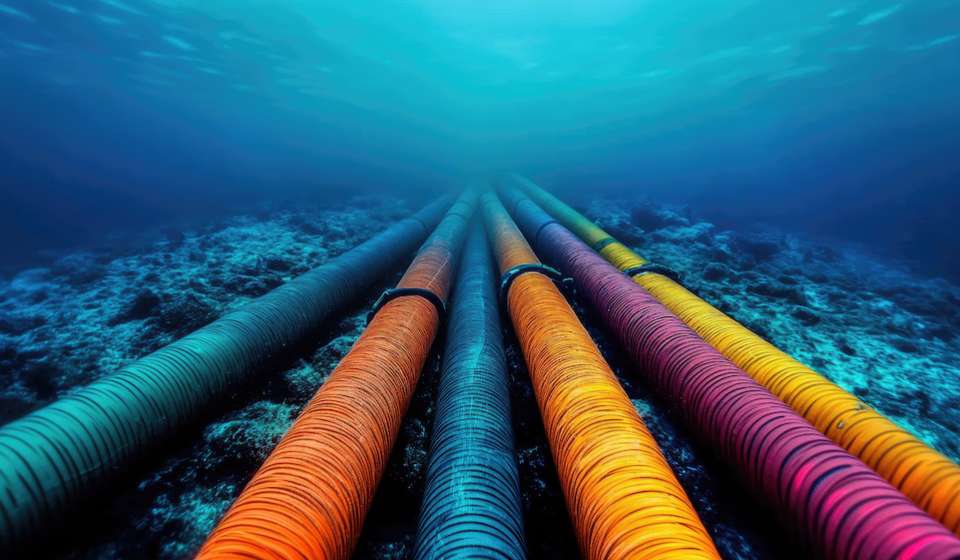
Illustration picture by by 123RF.
The seabed beneath Southeast Asia is becoming one of the world’s busiest infrastructure corridors, marked by a cluster of major systems reaching key milestones within months of each other.
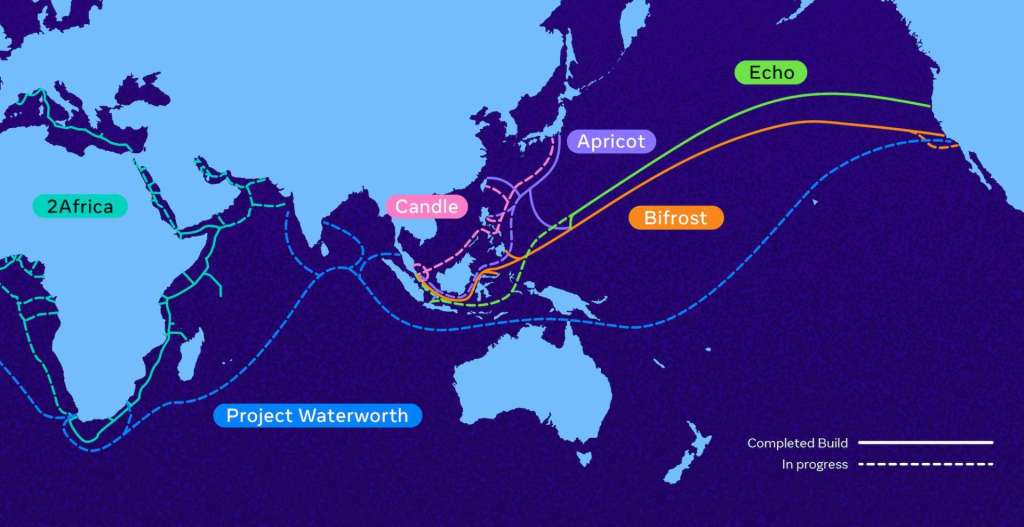
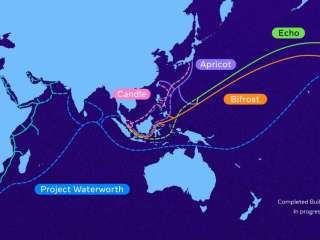
Bifrost, the 20,000 kilometres transpacific system led by Keppel and backed by Meta and Telin, is now ready for service and offers Singapore a new route to the US. Earlier in September, Meta and Softbank consortium introduced Candle, a 24-fibre pair system that will run from Japan to Singapore and anchor several new intra-Asia branches along the way.
These projects, along with ongoing builds like Apricot and MIST, reflect a new investment cycle in which hyperscalers and regional carriers are rebuilding the region’s international pathways from the seabed up.
These developments also show that global hyperscalers have moved from buying capacity on legacy systems to leading the design and funding of new routes, ensuring they can support rising cloud traffic, AI workloads, and latency-sensitive services across the region.
“Hyperscalers in general have been investing all around the world in waves and large numbers of cables,” says Simon Sherrington, research director at Analysys Mason.
“They want to control both the cost and the quality of delivering their services. The more infrastructure they own, and the fewer third-party networks and hops they rely on, the more control they have over the quality of experience they provide to customers,” Sherrington tells The Tech Capital.
Yet as these tech giants build their undersea networks, they must navigate more than engineering and costs. In a region marked by security tensions and growing demands for trusted infrastructure, cable routes are also now shaped by politics and regulation.
The choices over where these systems land will decide which paths get built, who captures the value, and how far the region’s digital economy and AI ambitions can grow.
Geopolitics and route diversity
As hyperscalers move from buying capacity to building their own cables, the question is no longer just how much they invest, but where those systems run. That brings geopolitics and route diversity to the centre.
This means cable builders are no longer choosing routes only based on technology or cost. They also have to consider politics.
Mike Constable, principal at Infra Analytics, said that some new cables like Bifrost and Apricot deliberately avoid the South China Sea, which he describes as “the biggest problem” due to disputes and overlapping claims, which means getting permits can be slow or politically sensitive.
“We saw SJC2 (the Southeast Asia-Japan 2) and ADC2 (Asia Direct Cables) a few years late due to geopolitics in the South China Sea,” Constable says.
He added that not just China with the nine-dash line, all these other countries are competing for who owns that part of the ocean. “People are looking to avoid that. Route diversity is a big driver, putting more redundancy into the global network.”
This shift is reshaping Asia’s connectivity hubs: Australia emerging as a southern anchor (bolstered by US alliances and Google’s direct US-Australia links), the Philippines supplanting Hong Kong amid geopolitical flux, and India is bridging Asia-Europe with data centre booms.
Yet intra-Asia demand surges in the South China Sea itself, via Chinese-led consortia like AUG East and PAE, highlighting the geopolitical tightrope.
The scale of the global buildout helps explain why these choices matter.
Constable estimates, citing a 2025 TeleGeography report he co-authored, the industry is “projecting another 1.6 kilometres of cables going in the water over the next 15 years,” effectively doubling the roughly 1.5 million kilometres already in service.
Over the same period, about 850,000 kilometres of legacy systems are expected to be decommissioned, including some 400,000 kilometres in the next five years.
Much of this new investment is on transpacific, transatlantic, and intra-Asia routes using 16 or 24 fibre pairs – while system suppliers are in the process of developing even more fibre pairs per system.
Like all systems, a large capacity system requires redundancy. Older smaller capacity systems cannot always provide that, so further investment in larger systems for redundancy purposes are needed, he adds.
Who captures the value?
With so much capital flowing into new systems, the question is who actually captures the value from this build-out? In Southeast Asia, the answer is varied across the value chain.
“Hyperscalers and over-the-top providers capture most of the value from new subsea cable projects,” says Jonathan Brewer, consultant at Telco2.
By contrast, neutral infrastructure hosts tend to operate on a cost-plus basis rather than earning market-level returns. They are more like utilities, attracting investors who accept steady but limited profits.
Brewer argues that in Southeast Asia’s mobile-first market, last-mile operators face intense competition delivering commodity connectivity. Expanding bandwidth to meet subscriber demands is prohibitively expensive until fibre-to-the-home rolls out, with 5G RAN investments merely treading water and failing to lift profit margins.
“So that leaves hyperscalers like Amazon, Google, and Meta, capturing the most value. And as it turns out, they’re the ones leading the investments. I have a feeling the local operators are only involved because protectionist regulations throughout the region require them to be involved,” says Brewer.
Where the cable boom can stall
Despite the volume of capital and announcements, getting these systems into the water is becoming more challenging as well.
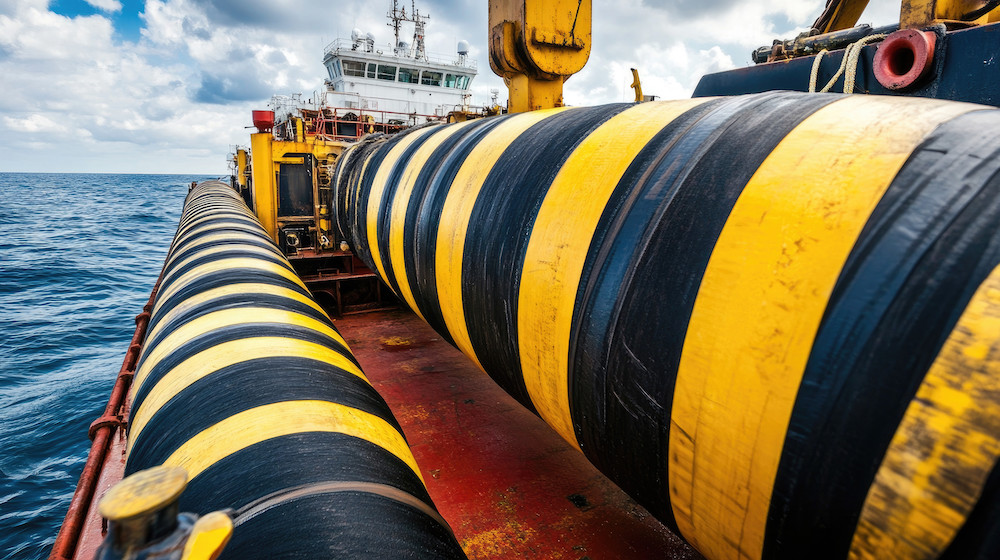
Analysts point to three main constraints on the current build cycle: a shortage of modern cable-laying and maintenance ships, increasingly complex regulatory and permitting regimes, and a push by governments to assert more sovereign control over who builds and repairs critical infrastructure.
Constable notes that, despite ageing fleets, investments in new subsea cable ships remain minimal and are aimed at replacing older vessels rather than expanding the fleets. This is a critical but underappreciated issue.
“Cable networks provide connectivity to data centres and cloud regions; the synergies between connectivity and data centres are obvious, but the industry’s core challenge lies in reinvesting in assets,” he says.
With 50% of installation ships and two-thirds of maintenance vessels hitting end-of-life in 10–15 years, and minimal fleet expansion, delays compound. Vietnam’s 2023 outage on all five international cables, for instance, took eight months to resolve due to repair backlogs.
Ship shortages create bottlenecks, potentially delaying projects. Suppliers control new system build timelines, which move to the right due to insufficient capacity, leaving investors with few options to expedite cable deployments.
Echoing this view, Sherrington agrees that the cable-laying fleets are ageing. “New ones will be needed, and there’s only a certain supply of them in the world. Regulation is also different in each country within the region.”
Brewers argues that, beyond physical constraints, regulation is often the bigger brake on project delivery. Protectionist rules and licensing requirements can slow deployment more than any limits in cable manufacturing or shipbuilding.
The role of local operators suggests that many are pulled into consortia because regulators in Southeast Asia typically require a licensed domestic partner for cable landings, adding another layer of complexity and negotiation to each project.
Geopolitics further complicates the matter as the sovereignty of the cable-laying and maintenance ships is also becoming important. According to Constable, the US, along with allies, advocates “trusted networks,” a concept that began with mobile networks and subsea cables, and has now broadened into “trusted ecosystems,” effectively expanding into the industry’s supply chain.
This evolving stance highlights government security concerns, for example, where Chinese vessels are repairing US-funded cables.
From seabad to digital economy
The surge of new subsea cable builds, if delivered on time, could reshape connectivity economics across the region.
New routes introduce competition, expand wholesale bandwidth, and target persistent inefficiencies, like China’s traffic detouring through Japan or the US due to poor Guangzhou links, or Australia-New Zealand detours via Singapore that increase latency for Filipino IT outsourcing hubs.
Cambodia and Laos carriers, too, face suboptimal local paths, often remedied quickest by hyperscaler extensions over peering upgrades. This allows ISPs to diversify away from ageing systems. That pressure tends to push prices down for businesses and consumers and open the door to wider use of cloud services.
Adding capacity to markets with limited international access can have meaningful downstream effects.
“If you can bring new international cables into a market that is not very well served, maybe going from one cable to two cables and doubling capacity with competition on the routes, then you can bring down the cost of internet services for people and companies in the country,” says Sherrington. This also improves a country’s ability to trade internationally and expands access to education and digital services.
The cable build-out also aligns with where data centres and AI infrastructure will land, as access to major fibre routes is now among the top criteria for data centre locations.
“We see organisations seeking permission to build a landing station with a data centre right beside it, and then providing good connectivity to other data centres inland. They can then look to attract multiple cables to that landing station or data centre asset combination,” he adds.
That matters because most enterprises are unlikely to build their own AI data centres and will instead rely on third-party facilities. As a result, the density of subsea capacity will help determine which markets emerge as AI hubs and which risk being left behind.
Still, analysts warn that this future depends heavily on timely execution. Brewer says that if the region’s long list of announced systems is delivered as promised, capacity should be sufficient to meet the next wave of demand. “Extra capacity will be sold to local partners where required, and to third parties where it makes commercial sense,” he says.
The risk is not too many cables but too few. “What we have to worry about is if multiple new projects do not get built on time,” Brewer adds. “If the region is ever starved of cable capacity, it could have negative impacts on its economies.”

Editor APAC, The Tech Capital
2 Mins|June 08, 2026

3 Mins|June 08, 2026
3 Mins|June 08, 2026
 Google bets $15 billion on India: AI hub, clean energy, and subsea cable
Following circulating media reports, Google confirms that it will invest US$15 billion in India ove...
 Google’s Tabua cable lands on Sunshine Coast, adding new Australia–US route
Google has landed its Tabua subsea cable at Maroochydore on Queensland’s Sunshine Coast, creating...
 Amazon plans first solo trans-Atlantic cable project
Amazon (NASDAQ: AMZN) is planning a subsea cable linking Maryland on the US East Coast and County C...
 Meta expands subsea infrastructure connecting east and southeast Asia with US
Meta (NASDAQ: META) will expand its subsea cable infrastructure in Asia, with the deployment of a n...
 SoftBank and Meta back new Japan to Singapore subsea cable
SoftBank has joined Meta, Tokyo-listed telco IPS Inc., Malaysia’s TM Technology Services, and Ind...
 SEACOM unveils new subsea cable project to strengthen African connectivity
African telco SEACOM has announced plans for a new subsea cable system, SEACOM 2.0, designed to imp...