



Power first strategy: How KKR, Blackrock are helping CyrusOne conquer market share one market at a time
Having recently joined CyrusOne in June of last year, what attracted you to the company at this moment of its evolution? What drew me to ...
Having recently joined CyrusOne in June of last year, what attracted you to the company at this moment of its evolution? What drew me to ...


 InfraAI’26: National Security vs Innovation: Who Controls the Future of AI Infrastructure?
This panel session examined the growing tension b...
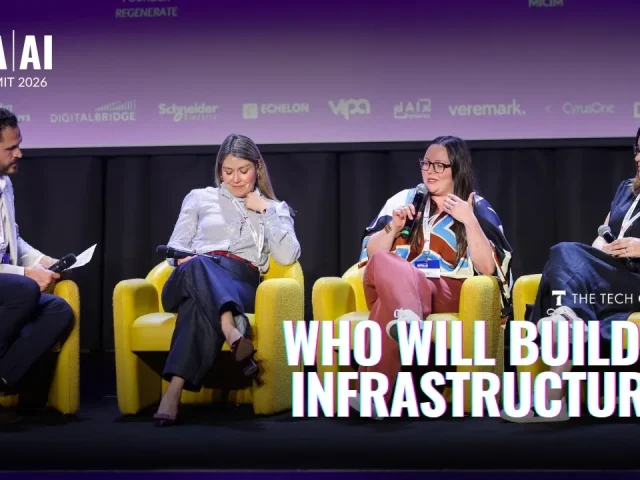 InfraAI’26: Who Will Build AI Infrastructure? The Talent and Pressure Challenge
This panel explored the human challenges behind t...
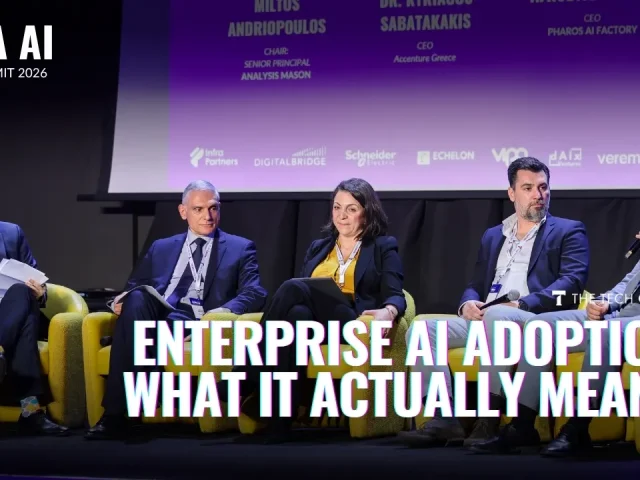 InfraAI’26: Enterprise AI Adoption: What It Actually Means for Data Centre Demand and AI Clouds
This panel examined how enterprise adoption of AI...


 Ep. 38 - The Land of Giants: Power, Private Capital and the AI Infrastructure Race, with Krupal Raval
In this episode of Great Business Minds, ...
 Ep. 34 - Inside the high-stakes race to keep Europe’s data at home, with Olivier Micheli
At the Datacloud Global Congress 2025 in Cann...
 Ep. 32 – From Dotcom to AI: Building Japan’s and the World’s Digital Infrastructure Gardens with Dan Kesler and Bill Schrader – Great Business Minds
Welcome to another episode of the Great Business ...
Every technological revolution is remembered for its ideas. History, however, shows that ideas reshape economies only when infrastructure e...
Nvidia reports on 25 February after the close, with markets looking past headline beats to the shape of AI capex into 2H 2026. Guidance, supply cadence and customer concentration will matter more than margins.
Founder and Editor, The Tech Capital
7 Mins
{{formattedDate}}
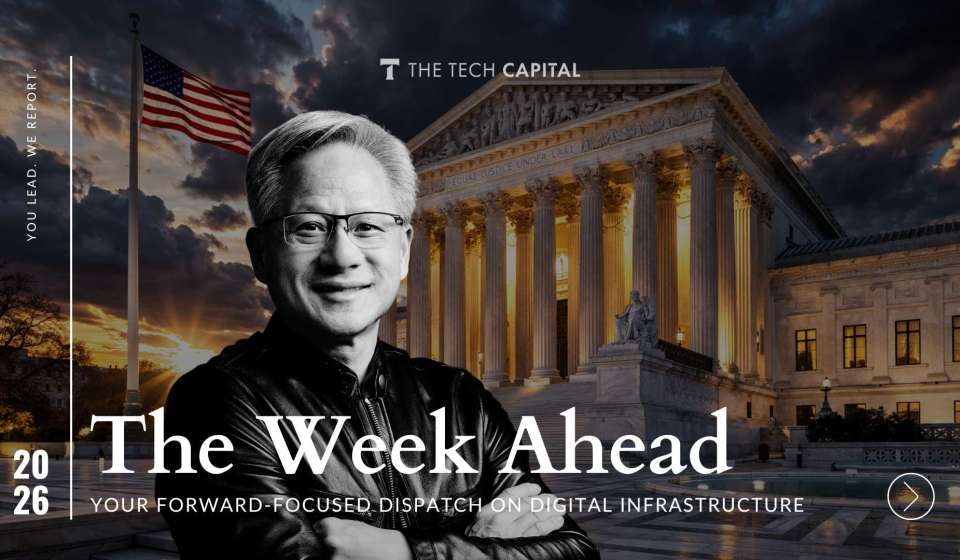
Nvidia (NASDAQ: NVDA) reports fourth-quarter results on Wednesday after the close. Consensus points to revenue of approximately US$65.7 billion, up 67% year-on-year, and earnings per share of US$1.52, a 71% increase.
Whilst those figures are substantial, they are also insufficient on their own.
Nvidia now accounts for roughly 7% of the S&P 500 and its share price has risen more than 1,500% since late 2022. That scale of appreciation changes the burden of proof. The market is no longer reacting to growth; it is calibrating sustainability.
Large technology customers have already signalled significant increases in AI capital expenditure for 2026. That backdrop creates what one analyst described as a “positive” set-up, citing middling year-to-date stock performance, bullish supply-chain signals and management’s visible frustration with doubts around growth and margin durability.
Yet dispersion in forward estimates remains wide. For the coming fiscal year, consensus EPS stands at US$7.76, implying growth of roughly 66%. The range of projections, however, spans from US$6.28 to US$9.68. That gap reflects disagreement not about whether AI demand exists, but about how durable and profitable it proves once deployment matures.
Melissa Otto, head of research at S&P Global Visible Alpha, noted the valuation tension succinctly: “If the bulls are right, then the stock is looking probably not too expensive. If the bears are right…it’s not that cheap.”
In other words, Nvidia’s multiple is less about trailing performance than about confidence in the forward curve.
The chip maker has consistently exceeded expectations over recent quarters but that track record now creates its own constraint. As Marta Norton, chief investment strategist at Empower, observed: “The expectation for outsized results for Nvidia has been a persistent theme over the past few years. And so it’s hard for Nvidia to surprise when everyone expects it to surprise.”
Recent price action reflects that dynamic and we just have to remember that following November’s earnings release, shares rose in after-hours trading before retreating in the subsequent session despite better-than-expected results.
The bar has moved from performance to validation.
Infrastructure implications
For digital infrastructure, the relevance extends beyond semiconductor margins.
Hyperscalers have announced substantial data centre and AI infrastructure expansion. Pipeline figures exceeding US$600 billion in aggregate AI-related investment have circulated in the market. The practical question is funding cadence and return profile.
If Nvidia confirms strong backlog conversion and sustained order momentum into 2026 and 2027, it reinforces the view that AI cluster deployment remains on schedule. In that scenario, constraints remain downstream – grid access, interconnection timelines and power availability.
If guidance signals moderation, the implication is not a collapse in AI demand but a transition toward capital discipline. That would affect underwriting assumptions across data centre development, particularly in secondary markets or projects dependent on speculative pre-leasing.
Nvidia’s commentary on customer concentration will also matter as a limited number of hyperscale buyers still drive the majority of advanced GPU demand. Any recalibration in procurement strategy, diversification toward in-house silicon, or adjustment in deployment tempo would ripple quickly across the infrastructure ecosystem.
Seeking Alpha’s equity research analyst Kenio Fontes, commenting on hyperscaler diversification efforts, argued that near-term displacement risk remains limited: “It’s not that short term, they can’t just produce a new chip to their cloud business in three or five years.” That reinforces the view of a multi-year window, but not an indefinite one.
Trade policy re-enters the frame
NVIDIA’s results arrive against a shifting macro backdrop.
A recent U.S. Supreme Court decision striking down prior sweeping tariffs initially lifted equity markets, only for President Donald Trump to announce a revised 15% blanket tariff under Section 122 of the 1974 Trade Act, effective for up to 150 days without congressional approval.
The abrupt adjustment from 10% to 15%, combined with the prospect of additional measures under Sections 301 and 232, reintroduces trade risk at a time when equity valuations are sensitive to margin compression.
For companies reliant on global supply chains – including Apple (NASDAQ: AAPL) and Nvidia – tariff implementation details matter. Input costs, component flows and cross-border manufacturing arrangements could face renewed scrutiny if policy volatility persists.
Markets now confront policy risk and legal risk simultaneously. For a stock with systemic weighting, that context amplifies sensitivity to guidance tone.
Still, the S&P 500 is modestly positive year-to-date, yet beneath the surface, volatility has been pronounced. Software stocks have been pressured by concerns over AI-driven disruption. Other members of the “Magnificent Seven” have underperformed in 2026, increasing the relative importance of Nvidia’s stability.
CEO Jensen Huang’s commentary will therefore carry weight beyond the income statement.
The market does not require perfection. It does require evidence that the current AI spending cycle is translating into durable economics rather than front-loaded enthusiasm.
Other earnings to note this week

Founder and Editor, The Tech Capital
4 Mins|June 03, 2026

4 Mins|June 03, 2026
 Is NVIDIA still investing $100 billion in OpenAI?
NVIDIA’s (NASDAQ: NVDA) plans to invest US$100 billion into OpenAI have stalled, according to rep...
 What does NVIDIA Rubin really mean for data centre cooling?
Earlier this month, NVIDIA CEO Jensen Huang told the audience at the Consumer Electronics Show (CES...
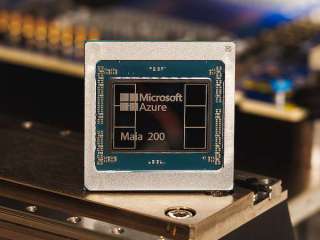 Microsoft rolls out new AI chip to reduce Nvidia’s developer advantage
Microsoft (NASDAQ: MSFT) unveiled the second generation of its in-house AI chip on Monday, alongsid...
 NVIDIA, AWS among firms weighing Indonesia investments, ministry says
Several global technology groups, including NVIDIA and Amazon Web Services (AWS), have signalled in...
 NVIDIA investment eases pressure on CoreWeave’s debt reliance
NVIDIA (NASDAQ: NVDA) has invested US$2 billion in CoreWeave (NASDAQ: CRWV) Class A stock and enter...
 Lenovo, NVIDIA launch gigawatt-scale AI cloud “Gigafactory” programme
Lenovo launched the Lenovo AI Cloud Gigafactory with NVIDIA, extending its partnership with the chi...