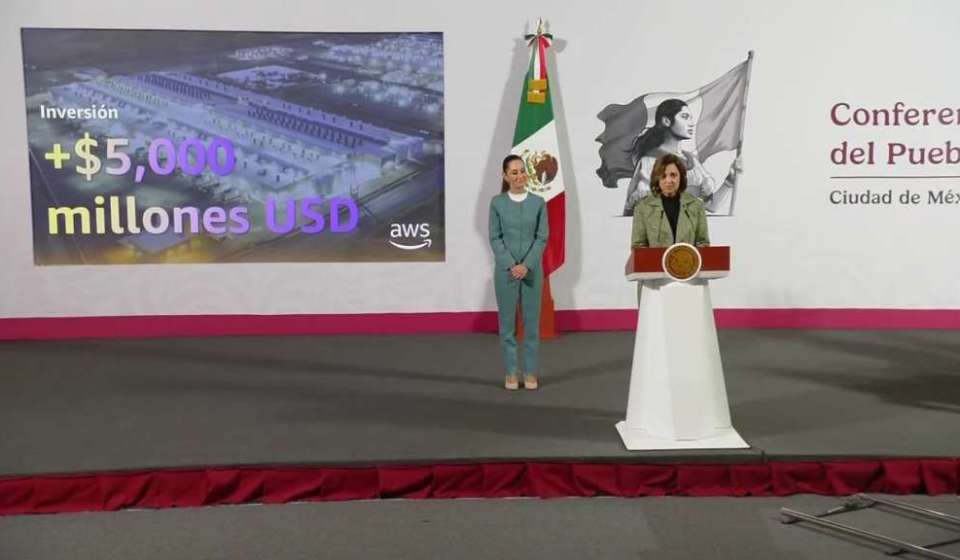
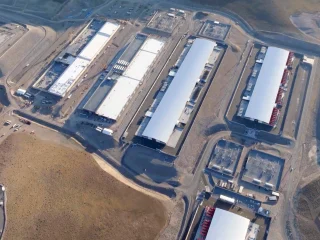
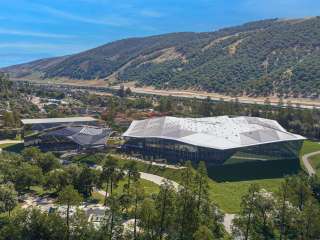
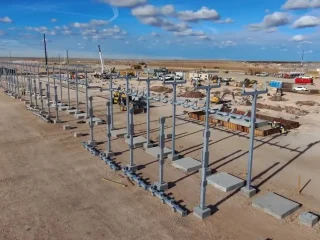
Amazon Web Services (AWS), the cloud computing division of US-based e-commerce giant Amazon, has launched its US$5 billion data centre investment in Mexico.
The announcement was made during Mexican President Claudia Sheinbaum’s morning briefing this week.
Mexico’s Economic Minister, Marcelo Ebrard, projected that this investment could contribute US$10 billion to the nation’s Gross Domestic Product (GDP) over the next 15 years, whilst creating 7,000 jobs.
The new data centre will be established in Queretaro, a state in central Mexico renowned for its industrial history.
Paula Bellizia, vice president for Latin America at AWS, led the Amazon delegation present at the announcement. She said: “Today we are here with you, Madam President, to launch the operations of our data centres in Mexico, that is, to inaugurate Amazon Web Services’ cloud computing infrastructure so that it can be offered from here, from Mexico.”
AWS’s official website indicates that AWS currently operates in 36 geographical regions, encompassing 100 data centres across various continents including North America, Western Europe, Asia Pacific, the Middle East, Africa, and Latin America.
Bellizia added: “Our cloud computing infrastructure will help position Mexico as a digital hub in the Americas and a leader in Latin America. It will lay the foundation for modernising and digitising governments and businesses—small, medium, and large—reducing costs and improving efficiency. Organisations can now rely on the most advanced, secure, and reliable technology to develop their solutions here in Mexico.”
President Sheinbaum said: “We are very proud of the moment we are living, and the investment being presented today clearly demonstrates that Mexico has not only a great present but also a great future.”
News come days before the 47th US Presidency begins
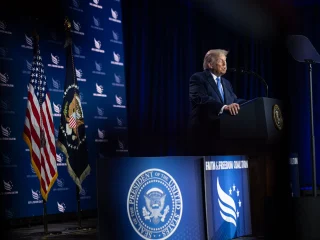
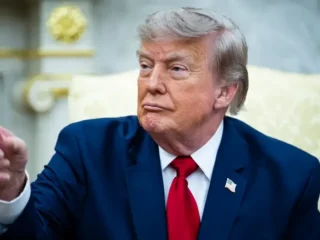
The announcement of AWS’ US$5 billion investment in Mexico comes at a pivotal moment in US-Mexico relations, just days before Donald Trump is set to reclaim the White House from the Democrats.
Trump’s imminent return to the role of commander-in-chief has cast a shadow of uncertainty over US-Mexico relations.
His previous tenure was marked by contentious rhetoric regarding immigration and trade, including threats of punitive tariffs on Mexican imports.
The AWS investment, therefore, can be seen as a vote of confidence in Mexico’s economic potential, potentially serving as a counterbalance to the political tensions that may arise.
President Sheinbaum has adopted a measured approach to the changing political tide in Washington. In a recent speech marking her first 100 days in office, she emphasised Mexico’s sovereignty whilst expressing optimism for “good” relations with the incoming Trump administration.
Sheinbaum’s stance reflects a delicate balancing act: asserting Mexico’s independence while maintaining open channels for dialogue and cooperation.
The AWS investment could serve as a stabilising factor in this uncertain period. It underscores the deep economic ties between the two nations, which often transcend political rhetoric.
The creation of thousands of jobs and the potential US$10 billion contribution to Mexico’s GDP over the next 15 years may provide both countries with incentives to maintain a working relationship, despite potential disagreements on issues such as immigration and border security.
However, Trump’s campaign promises to rename the Gulf of Mexico as the “Gulf of America” and his threats of imposing tariffs have already elicited responses from the Mexican side, including Sheinbaum’s tongue-in-cheek suggestion to revive the 17th-century label “Mexican America” for North America.


 Facebook
 Youtube
  TikTok
 Threads
 WhatsApp