



Stability on the surface - Growth holds steady as the global economic order realigns
For much of the past year, the global economy has defied expectations. Interest rates remain elevated relative to the ultra-low er...
For much of the past year, the global economy has defied expectations. Interest rates remain elevated relative to the ultra-low er...


 Data4 CEO warns AI demand surge is outpacing data centre capacity as industry struggles to keep up
In this interview from Paris, Olivier Micheli, pr...
 InfraAI’26: National Security vs Innovation: Who Controls the Future of AI Infrastructure?
This panel session examined the growing tension b...
 InfraAI’26: Who Will Build AI Infrastructure? The Talent and Pressure Challenge
This panel explored the human challenges behind t...


 Ep. 38 - The Land of Giants: Power, Private Capital and the AI Infrastructure Race, with Krupal Raval
In this episode of Great Business Minds, ...
 Ep. 34 - Inside the high-stakes race to keep Europe’s data at home, with Olivier Micheli
At the Datacloud Global Congress 2025 in Cann...
 Ep. 32 – From Dotcom to AI: Building Japan’s and the World’s Digital Infrastructure Gardens with Dan Kesler and Bill Schrader – Great Business Minds
Welcome to another episode of the Great Business ...
The agreement between the United States and Iran to end hostilities and reopen the Strait of Hormuz has largely been viewed through the len...
The company has also launched energy and water policies covering grid use, cooling, renewables and reporting across its Australian AI infrastructure sites.
Editor APAC, The Tech Capital
5 Mins
{{formattedDate}}
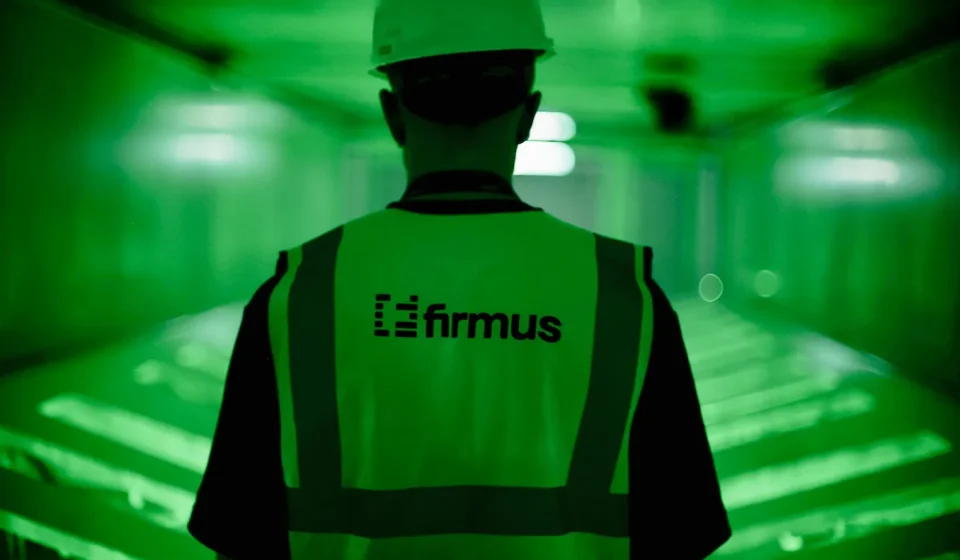
Photo: Firmus.
Firmus Technologies has signed a 12-year wholesale energy supply agreement with energy commodities trading company Gunvor Group for 600MW of firm electricity to support the next phase of Project Southgate, its plan to develop large-scale AI factory campuses in regional Australia.
Under the deal, Gunvor will support the development of 1.2GW of new renewable generation and 1.5GWh of battery storage by 2032 for Firmus’ planned expansion in South Australia.
The agreement includes a demand response commitment, under which Firmus will reduce electricity consumption for up to 220 hours a year when wholesale power prices exceed agreed thresholds. The company said the arrangement is intended to ease demand during periods of grid stress and make more electricity available to other users.
The deal supports the first phase of Firmus’ South Australian campuses at Tailem Bend and Stirling North, which together represent 2.7GW of planned capacity.
It also includes a long-term offtake agreement for GreenPoint Energy’s Koolunga Battery Energy Storage System near Brinkworth in South Australia’s Mid North. The 200MW/800MWh grid-forming battery will account for more than half of Firmus’ initial firming capacity commitment.
Oliver Curtis, Co-CEO of Firmus Technologies, said the company is developing the campuses in regional South Australia because the locations can support both large-scale AI infrastructure and the energy investment required.
The agreement would help Firmus back new renewable generation, battery storage and flexible energy use. Curtis said the Koolunga battery is the first project tied to that approach, adding firming capacity to the grid as Firmus develops its campuses.
“This is about investing in regional South Australia, creating new infrastructure, supporting local jobs and strengthening the electricity system while building the capacity Australia needs for the next generation of AI,” Curtis added.
South Australian Premier Peter Malinauskas said the project reflects the state’s efforts to attract investment tied to clean energy, AI and digital infrastructure, and could bring jobs and investment to regional South Australia.
The development follows Firmus’ expansion into Indonesia, where it is planning a 360MW Nvidia DSX AI Factory campus in Batam with Singapore-headquartered DayOne. The project is backed by a compute partnership with Nvidia running through 2034.
Launches energy and water policies
Firmus has also released its Australian Energy Policy and Australian Water Stewardship Policy, outlining how it plans to manage the power and water requirements of its AI infrastructure in Australia.
The policies cover energy efficiency, renewable energy procurement, battery storage, demand response, network costs, cooling technology and reporting across Firmus’ Australian operations.
Firmus said its Energy Policy builds on the Australian Government’s March 2026 expectations for data centre and AI infrastructure developers by turning them into specific commitments for its grid-connected operations.
Curtis said large-scale AI infrastructure would need to be designed around Australia’s energy system and natural resources. He said Firmus has spent seven years developing AI factories, operating software and energy management systems with that approach in mind.
Firmus said its Water Stewardship Policy sets out how the company plans to limit cooling-related water use across Project Southgate. The policy prioritises dry-mode cooling, site-specific water planning, the use of recycled or non-potable water where suitable, and reporting on water performance.
“Water is scarce in Australia, and cooling high-performance compute shouldn’t drain it,” said Hamish Kerr, Lead Mechanical Engineer at Firmus Technologies.
He added the company’s AI factories use cooling technology that runs in dry mode by default, meaning cooling would not require water on most days. Firmus expects annual average cooling water use at its Launceston site to be equivalent to about 10 days of cooling demand, or roughly the annual water use of 20 average households.
Firmus would apply the same approach across Project Southgate sites, with cooling and water use tailored to local conditions, Kerr continued.
The policies apply to Firmus’ owned and operated grid-connected sites in Australia, including new AI factory campuses once operational. Firmus said it will report progress against both policies as part of its annual reporting.

Editor APAC, The Tech Capital
3 Mins|July 01, 2026

5 Mins|July 01, 2026
3 Mins|July 01, 2026
 Firmus, Nvidia, DayOne advance 360MW AI factory campus in Batam
Firmus Technologies is expanding its AI factory footprint into Indonesia with a planned 360MW Nvidi...
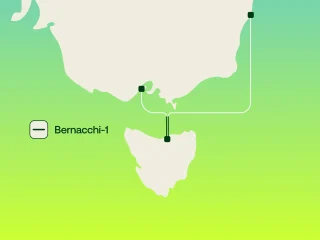 Firmus, SUBCO to build Tasmania-mainland Australia subsea cable
Australia’s AI infrastructure startup Firmus and subsea infrastructure company SUBCO have agreed ...
 Firmus set to raise $505 million, targets $5.5 billion valuation
Firmus, an Asia Pacific-based AI infrastructure company, is set to secure a further US$505 million ...
 Firmus strengthens board with three non-executive appointments
Firmus Technologies has appointed Lee Hatton, Christine Bartlett, and Julie Shuttleworth AM as non-...
 Firmus signs multi-billion-dollar GPU deal for Melbourne Project Southgate
Firmus Technologies has signed a long-term contract with an unnamed global technology group for inf...
 Blackstone and Coatue lead $10 billion debt financing for APAC neocloud Firmus
AI infrastructure company Firmus has secured a US$10 billion debt financing facility led by funds m...