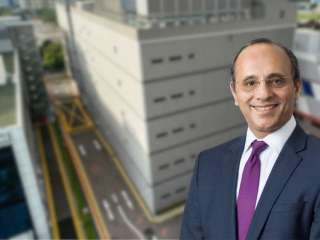
In an interview on the sidelines of Datacloud Global Congress 2025 in Cannes, André Busnardo, Commercial Director at Tecto Data Centers, spoke to The Tech Capital on Brazil’s emerging role in the global data centre industry.
Busnardo discussed how the country’s renewable energy resources, strategic location, and impending policy changes are transforming its digital infrastructure.
From São Paulo’s established tech scene to Porto Alegre’s rising prominence, this conversation explores Brazil’s evolving position in the international data economy and the challenges that lie ahead.
- How is the data centre market growing in Brazil? To what extent is the sector being reconfigured in the face of new requirements from hyperscale and AI – for example, greater energy demand and lower demand for proximity (for AI training, for instance)?
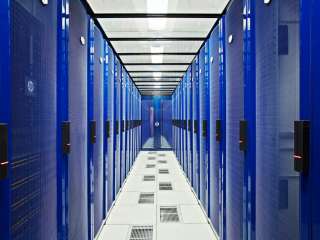
AB: The data centre market in Brazil is experiencing robust expansion and undergoing a reconfiguration driven by new technological demands, particularly artificial intelligence, which requires greater computational capacity and higher densities per rack. This scenario has accelerated the need for modern infrastructure capable of supporting energy-intensive and cooling-intensive workloads, which creates an opportunity for the country to consolidate its position as a hub for large-scale operations.
Simultaneously, the dynamics of hyperscale and AI model training have shifted part of the demand to regions with greater energy availability and physical space, reducing the exclusive concentration in large urban centres. This opens up opportunities for the interiorisation of investments and the growth of strategic regions, such as the Brazilian Northeast, which already stands out in international connectivity and clean energy supply.
Given this, it is essential that data centres are not only scalable but also efficient and sustainable, prepared to handle increasingly complex loads.
- What should be the impacts of the new policy for the sector being designed by the government? What is envisaged so far? Opportunities and challenges.
AB: The new policy should contribute to investments in data centres in Brazil as it reduces taxes on equipment that is mostly imported and brings incentives to promote sustainability and research and development. Brazil has several competitive advantages to attract these global investments – such as renewable energy, connectivity infrastructure, and available area – and still faces some challenges ahead, but we view the government’s measure positively.
- What are the main opportunities and advantages of Brazil for the sector? Connectivity, space, energy, workforce.
AB: Brazil brings together a strategic combination of factors that make it highly attractive for the data centre sector. In addition to already housing more than 50% of Latin America’s data centre infrastructure, its geographical positioning allows direct connections with North America and Europe, through hubs such as the Fortaleza IXP.
Added to this is an energy matrix predominantly composed of renewable sources – about 85% of generation – which represents a relevant advantage for a sector with high energy consumption and growing demand for cleaner and more efficient solutions. Finally, the country has vast land availability, which facilitates infrastructure expansion without the limitations of densely populated regions, in addition to having a qualified workforce and an internal market undergoing accelerated digital transformation, driven by the adoption of AI, cloud, and 5G.
- And the barriers? Taxes, energy, etc. How to overcome them?
AB: Despite the favourable scenario, the sector faces significant challenges in Brazil. The high tax burden, bureaucracy for obtaining licences, and legal uncertainty are recurring obstacles to the construction and operation of data centres. Additionally, issues such as access to energy infrastructure and the distribution network, as well as self-production tariffs, require regulatory attention.
To overcome these barriers, greater articulation between the public and private sectors is fundamental, with public policies that encourage investments, simplify processes, and ensure legal stability. Tecto is always open to contributing to discussions about the sector, seeking continuous improvement and growth.
- What makes the country attractive for new investments?
AB: Brazil is one of the greatest promises for the expansion of digital infrastructure in the world, mainly due to the growing demand for cloud services, artificial intelligence, and low-latency applications that are accelerating the search for robust and sustainable solutions.
The country has a privileged geographical position, national and international connectivity via submarine cables, renewable energy at competitive prices, and wide availability of land, which addresses various bottlenecks in the sector. Furthermore, the advancement of regional hubs such as Fortaleza demonstrates that it is possible to distribute infrastructure efficiently, reducing centralisation risks and promoting regional development.
These factors make Brazil a strategic destination for companies seeking high performance, scale, and sustainability in their digital operations.
- What are Tecto’s main ongoing projects in the country?
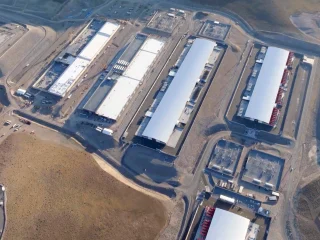
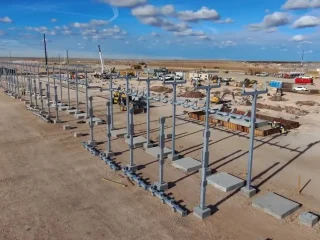
AB: Tecto is executing a robust investment plan that foresees an initial allocation of US$1 billion for the construction and expansion of edge and hyperscale data centres in different regions of the country. Two projects stand out at this moment: Mega Lobster, in Fortaleza (CE), and the new hyperscale facility in Santana de Parnaíba (SP).
Mega Lobster is under construction at Praia do Futuro and will have a total power of 20 MW, 13,000 m² of built area, 100% use of renewable energy, and direct connection to the submarine cable station and the Fortaleza IXP – one of the main traffic exchange points in the country. In Santana de Parnaíba, Tecto acquired land for the construction of a hyperscale data centre with a total power of 200 MW. The facility will have a strategic location and will be designed to meet the growing demand for AI, machine learning, and cloud applications. Both projects reinforce Tecto’s commitment to advancing digital infrastructure across the country and offering scalable solutions.
- How do you imagine Brazil’s tax incentives for data centres will impact the competitive landscape of the sector, both nationally and internationally?
AB: The planned tax incentives for the data centre sector in Brazil have the potential to reposition the country more competitively on the global stage. The tax relief on the supply chain, especially on imported equipment, is an important step towards making large-scale projects economically viable and reducing the entry cost for new players in the market. This tends to increase the country’s attractiveness compared to other destinations in Latin America and even more consolidated markets, such as the USA and Europe, which currently face challenges of cost, space, and energy.
Internally, the measure can accelerate the decentralisation of infrastructure, fostering the emergence of new digital hubs beyond large urban centres. This expands local competitiveness and strengthens the national digital ecosystem. If accompanied by regulatory advances and investments in clean energy and connectivity, the fiscal policy can be the turning point to consolidate Brazil as a strategic hub for digital infrastructure for the next decade.
- Considering that 84% of the Brazilian energy matrix comes from renewable sources, how does your company plan to leverage this advantage in terms of sustainability and operational efficiency?
AB: Tecto has sustainability as a strategic pillar, and the Brazilian energy matrix, mostly composed of renewable sources, is a competitive advantage that we seek to enhance throughout our operation. We have projects for 100% renewable energy self-production. Additionally, our engineering team constantly evaluates the installation of equipment that can improve energy and water consumption efficiency, as sustainability is one of the main priorities in developing facilities prepared not only for the present but also for a greener future.
- As a director of Tecto, how do you plan to compete or collaborate with large international technology companies that may be attracted by these incentives, and what unique value proposition can you offer?
AB: At Tecto, we see big techs, cloud providers, streaming platforms, and other global technology companies as strategic partners, not as competitors. Our business model is carrier-neutral and aimed precisely at serving these companies with neutral and scalable cutting-edge infrastructure, high performance, and tailored solutions.
We have some strengths that differentiate us from other players in the sector, such as our investment capacity and solidity; the growth of our edge and hyperscale data centre park; robust, resilient, and innovative infrastructure that contemplates not only the offer of data centre services but also the possibility of contracting terrestrial and submarine connectivity services in Brazil and 6 other countries – Argentina, Bermuda, Chile, Colombia, United States, and Venezuela offered by V.tal. All of this plus scalability and agility to meet our clients’ business demands quickly and reliably.
- You recently announced V.tal and Meta’s partnership to build a submarine cable in Porto Alegre that will be connected to a new Tecto data centre… What is the importance of this project in attracting international investments?
AB: The new submarine cable project in Porto Alegre, resulting from the partnership between V.tal and Meta, is strategic to reinforce Brazil’s position as a global connectivity hub. It will expand data traffic capacity between Latin America, North America, and other regions of the world, creating an international low-latency route.
This cable will be connected to Tecto’s data centre to be built in the region and to V.tal’s high-capillarity network, creating a competitive advantage to attract national and international investments – especially from companies that demand robust, neutral solutions with global connectivity, such as big techs, content platforms, and cloud providers.
- Should the Southern region become a strategic hub for connectivity and data centres as is happening today with Fortaleza/Ceará in the Northeast region?
AB: Yes. The Southern region has all the conditions to consolidate itself as a new strategic hub for connectivity and data centres, just like the Northeast, with Fortaleza. Porto Alegre, in particular, is gaining prominence with the arrival of the new submarine cable from V.tal in partnership with Meta, which will open a new international data route and position the city as a global connectivity hub. We will also soon build a new data centre in the city that will be connected to V.tal’s cable, allowing for high-volume data storage and processing.
It will be a unique infrastructure that will attract the interest of operators, big techs, OTTs, and internet providers, as well as other submarine cable companies. All countries in the Southern Cone will benefit from this new ecosystem, not to mention end users and companies that will have a better experience in using the internet and digital applications.
The combination of international connectivity, growing demand for digital solutions, and attraction of content companies makes the region highly attractive for investments – and paves the way for infrastructure decentralisation, promoting innovation, job creation, and local economic growth.


 Facebook
 Youtube
  TikTok
 Threads
 WhatsApp