As Australia sees data growth rapidly increasing due to a variety of factors, one homegrown data centre operator hopes to be at the forefront of a significant opportunity.
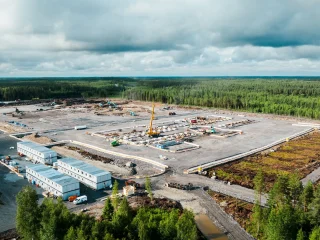
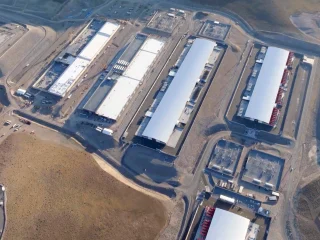
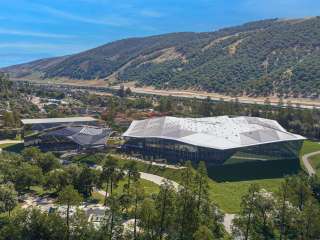
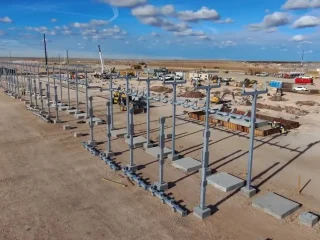
Macquarie Data Centres is currently expanding its campus at the Macquarie Technology Park in Sydney, adding a new 47MW building dubbed IC3 Superwest, that is custom-made for cloud and AI workloads.
Furthermore, group executive David Hirst tells The Tech Capital that Macquarie is looking for even more sites in Sydney, as data growth in Australia shows no sign of slowing down.
“We’re looking to purchase more campuses in the Sydney North Area in order to meet the needs of our hyperscale and wholesale customers,” Hirst says. “And we’re looking at a ten-year road map there to have continuous capacity available.”
The size of these new campus’s is likely to be even bigger than the IC3 SuperWest build, with Hirst targeting around 80MW.
“Bigger would be better because we know that as the exponential growth of data continues, the more and more capacity we need,” he says. “we’ve raised some capital already for our next site, so we’re ready to go.”
Hirst says there are a number of factors that are driving this boom in data processing and storage, from supply chain automation, IoT, cloud adoption and big data itself.
But the two biggest factors he points to in Australia are AI and data sovereignty, and with the expansion to the Macquarie Tech Park campus and a new campus in Sydney, Hirst hopes that Macquarie can capitalise on these two trends.
AI in Australia
“AI is still emerging in Australia,” Hirst says. “But it’s very much happening overseas, and we can see it creating huge amounts of capacity requirements from data centres and huge amounts of data creation.”
While for now investment in AI applications has been more muted in Australia than in the US, Hirst says he expects this to change, and for the technology to pick up pace soon.
When it does, new data centres are going to be essential. “Not all data centres are able to house all AI deployments,” Hirst says.
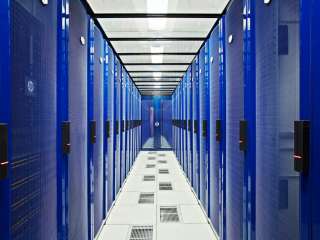
“AI can have over 100 kilowatts in a single rack, and so the type of cooling required for GPU AI services requires a combination of liquid and air-cooling.”
Macquarie’s IC3 East data centre has been operational for close to three years, and does offer liquid immersion cooling. The IC3 SuperWest building currently under construction is also designed with this AI cooling architecture in mind, but if other data centres in operation under Macquarie’s portfolio or elsewhere in Australia want to support AI workloads, retrofitting is required to support the denser racks.
But Hirst doesn’t think this will be necessary. “I think there’s going to be a lot of new facilities that needs to be built,” he says. Rather than investing in upgrading an older data centre, Hirst believes it makes more sense to build new facilities that can house both cloud and AI services, with a flexible design.
“The facilities that are available today are largely sold, and the cloud deployments hosted within them are not going anywhere,” he says. “I don’t think anyone is thinking about retrofitting an existing facility for AI – you’re better off starting again.”
Data Sovereignty in Australia
Another trend Macquarie intends on capitalising on is the issue of data sovereignty within Australia.
Over a decade ago, when cloud adoption was in its infancy, Hirst says that a lot of Australian companies were housing data overseas, sometimes unknowingly.
“Then companies woke up. Governments woke up and realised that they needed that data to be onshore,” he says.
The risk of storing data overseas is simply too great, he argues. Being physically located in another jurisdiction makes it incredibly difficult to recover data and intellectual property if an organisation or government were to be locked out of it. With this realisation setting in, Hirst says that now, most organisations and all of government store what they can within Australia itself.
As this policy has evolved, Hirst says that the inspection of the risks are getting more forensic. Now it’s not enough to simply be housed onshore, there is scrutiny applied to the owner of the building, the data centre operator, and to understand what risks are associated with the jurisdiction that organisation falls under.
“That data centre might be run by a Chinese company even though it’s inside Australia, and it’s subject to Chinese laws, or maybe it could be part of the part of the government and then you could have, risk to your data, risk to your IP at that point in time.”
Hirst is proud of Macquarie’s status as a sovereign provider, meaning it’s an Australin company, governed by Australian laws and regulations, that can house your data within Australia. He’s confident this is the best option for corporations and government’s.
“If you’re in Australia and you’re a government or you’re a corporate, why wouldn’t you buy made in Australia?”
“It’s as competitive. You’re de risking your business. It’s more cost efficient because of that (decreased) risk,” he argues.
The regulatory framework governing data storage in Australia is starting to lean more heavily towards Hirst’s point of view.
The governments Data and Digital Government Strategy, Policy for the responsible use of AI in government and Digital Transformation Strategy all make reference to the sovereignty of data hosting.
“There’s many comments from government around where they’re headed with policy around critical infrastructure,” Hirst says. “We’re seeing changes in industries that are pseudo-government or government industries that are seen as critical infrastructure and there’s a drive there to put their data into sovereign data centres.”
For enterprises, the potential restrictions around non-sovereign providers offers a competitive advantage to those choosing a sovereign provider like Macquarie.
“I think it’s just very compelling,” Hirst concludes. “We believe being a sovereign provider is a unique value proposition, there’s a limited number of us (in Australia) that do this. But we also think that it gives competitive advantage to those that house their equipment in our facilities”.


 Facebook
 Youtube
  TikTok
 Threads
 WhatsApp