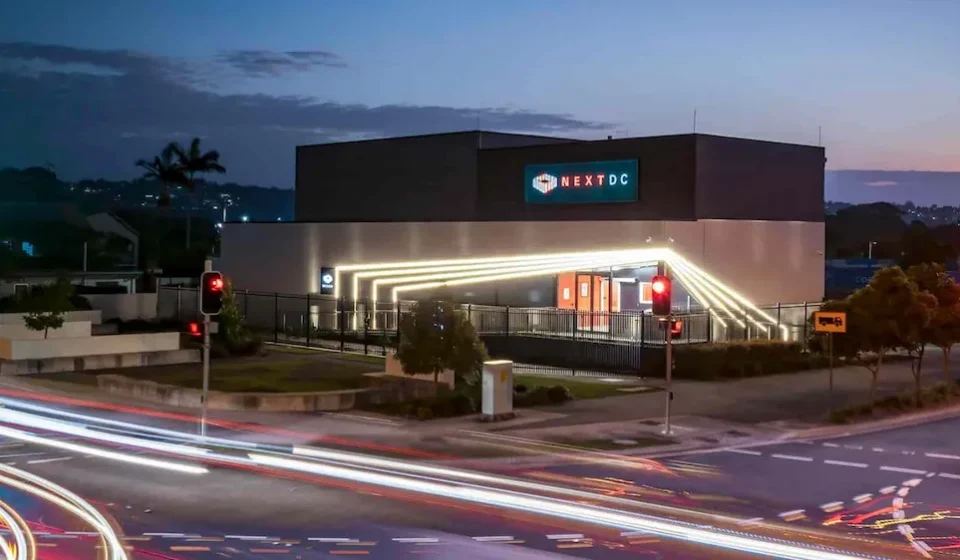
Australian data centre operator NEXTDC (ASX: NXT) has signed binding documents for A$2.3 billion (US$1.6 billion) in new senior debt facilities, increasing the size of the financing from the A$1.8 billion in commitments announced in May.
The company said on Friday that the A$500 million increase reflects support from a syndicate of domestic and international banks, following a record increase in contracted utilisation announced in April.
The new facilities follow several recent funding initiatives by NEXTDC, including a A$1.5 billion entitlement offer, a A$1.7 billion hybrid securities offer and a A$750 million wholesale notes offer.
Once the facilities reach financial close, NEXTDC’s total available senior debt facilities will increase from A$6.4 billion to A$8.7 billion.
The new facilities will sit under NEXTDC’s existing common terms deed poll, with margins broadly in line with the company’s existing senior debt facilities of similar tenor.
Proceeds will mainly be used to fund capital expenditure linked to recent customer contract wins and ongoing data centre developments, as well as for general corporate purposes.
Financial close is expected in mid-July 2026, subject to customary conditions.
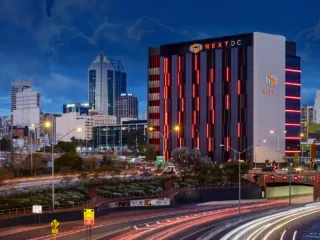
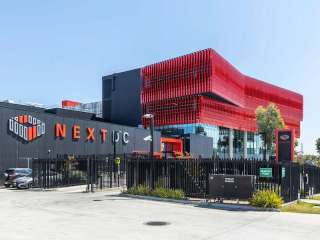
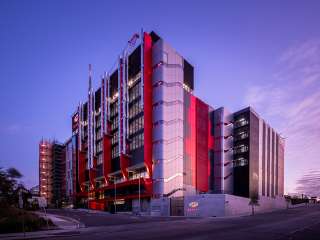
NEXTDC operates 18 data centres and has a 3GW development pipeline, according to its website.
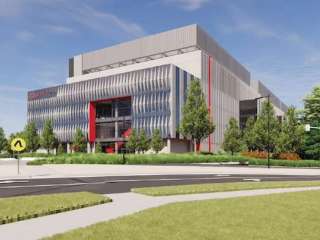
In May, it launched KL1 Kuala Lumpur, its first international data centre, as the operator expands into Southeast Asia. The company has also launched a A$1.5 billion entitlement offer to help accelerate development of its S4 site in Sydney through the end of FY27.
In its financial results for the half year ended 31 December 2025, NEXTDC reported a 137% increase in contracted utilisation to 416.6MW, with a 296.8MW forward order book expected to move into billing between the rest of FY26 and FY29.
The company invested A$1.29 billion in capital expenditure during the period, mainly across S3 Sydney, M3 Melbourne, KL1 Kuala Lumpur and other expansion projects.
NEXTDC has also raised its FY26 capex guidance to A$2.4 billion to A$2.7 billion, from A$2.2 billion to A$2.4 billion previously, reflecting higher contracted utilisation and expected new customer contracts.