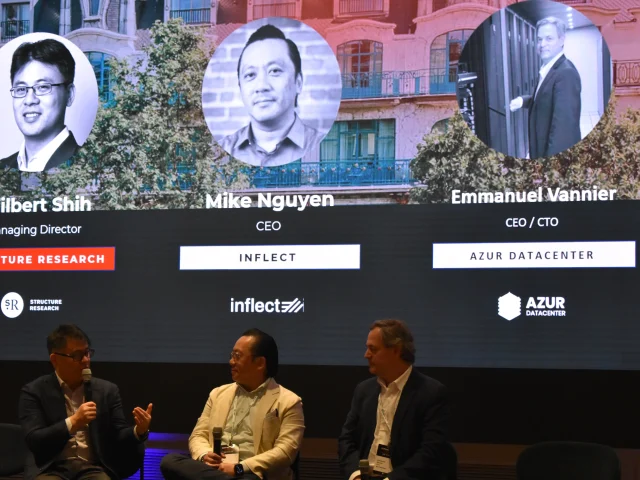
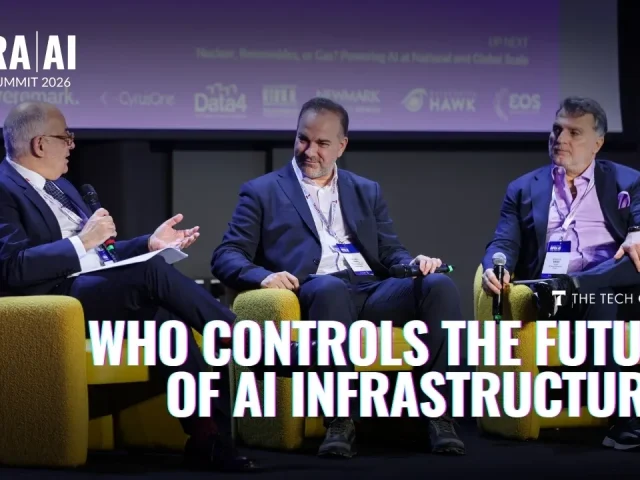
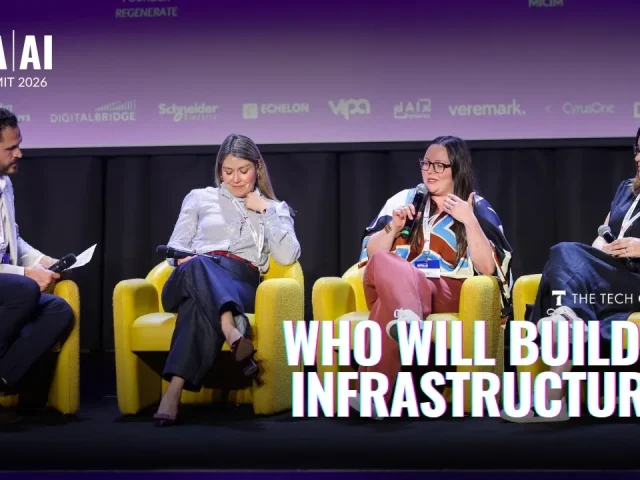
The 20th Datacloud Global Congress, held in Cannes, France, brought together industry leaders, investors, and innovators to discuss the rapidly evolving landscape of data centres and digital infrastructure.
With over 4,500 attendees, the event focused on the sector’s unprecedented growth and the challenges it faces.
Here are 20 key insights from the congress:
- AI Drives Unprecedented Growth
Artificial Intelligence (AI) has emerged as a primary driver of data centre growth. Steve Touser, Managing Director at JP Morgan, noted: “Since DeepSeek and the beginning of the year, we have already added about 80-plus gigawatts to that. So things since DeepSeek have actually accelerated materially early this year.”
- Trillion-Dollar Investments
The industry has seen capital commitments reach between US$1.2 trillion and US$1.5 trillion in the first six months of 2025 alone. The massive influx of capital underscores the sector’s critical role in the global economy.
- Power Constraints Reshape the Market
Power availability has become a significant factor in data centre location decisions. Harold Busker, CEO and co-founder of Enlightened, said: “There is no power, for instance, in Amsterdam. There is no power in Dublin. The power in Paris and Frankfurt is very limited.”
- Shift to Emerging Markets
The power constraints in traditional data centre hubs are driving expansion into new markets. As Busker explained: “It will expand the data centre industry broader over the continent, because you have to. There is no other way.”
- Middle East Emerges as a Key Player
The Middle East, particularly Saudi Arabia, is becoming a significant player in the data centre market. Carsten Winter, president of EMEA for Vertiv, stressed the region’s rapid decision-making and substantial investments.
- Nordics Gain Prominence
The Nordic region is attracting attention due to its available power and green energy sources. Winter noted: “In the Nordics, of course, there is, to some degree, available power. In some aspects, some of the players are particularly fond of the fact that it’s a green power.”
- Scale and Speed of Development
The scale of data centre projects has increased dramatically. Chris Baxter, Chief Revenue Officer of Apto, said: “Back in the day, it’s not too long ago, a 10 megawatt facility was a big, a decent leased data centre. I mean, now it’s just a data hall, right? We are talking campuses, hundreds of megawatts, and if you look overseas, even gigawatts.”
- Focus on Sustainability
Sustainability has become a non-negotiable aspect of data centre operations. David West, CFO of Apto, emphasised: “ESG is an integral part of our business; it starts at design.” I mean, we try to do sustainability by design.”
- Heat Reuse Initiatives
Data centres are increasingly looking at heat reuse as part of their sustainability efforts.
- Data Sovereignty Concerns
Data sovereignty has become a crucial consideration in data centre operations. Patrick Schulz, CRO of Maincubes, said: “Data governance has become a top priority, and for enterprise customers, signing up with a European operator means they are protected from any foreign jurisdictions.”
- Hyperscalers Seek Certainty
Scott Newcomb, VP for hyperscaler at Maincubes, shared that hyperscalers are increasingly looking for certainty in their data centre providers: “They’re not just buying capacity anymore, they want to buy certainty.”
- Liquid Cooling Solutions
The industry is rapidly developing liquid cooling solutions to manage increasing power densities.
- Prefabrication and Modular Design
To meet the demand for rapid deployment, companies are turning to prefabrication and modular design. Winter explained: “We are now seeing clients that are looking for deployments within six, eight months.”
- AI’s Impact on Hardware Requirements
The rise of AI is driving significant changes in hardware requirements. Philip Maranjala, Chief Marketing and Product Officer at EdgeConneX, said: “We’re kind of in this hyper-speed moment right now with where cloud continues to scale. AI, though, is what’s the game changer, both in terms of the scale and power to get to the data centre, and then the scale to get to the racks.”
- Funding Models Evolve
Steve Touser from JP Morgan highlighted the difference in funding models compared to previous tech booms: “This time around, first and foremost, the initial build-outs are built by extremely well-funded balance sheets and cash.”
- Research Cycle in AI Development
Touser also noted that hyperscalers view current investments as part of a research cycle: “The hyperscalers view this as more of a research cycle, in a sense, for at least the next couple of years.”
- European Market Challenges
Europe faces unique challenges in the data centre market. Touser observed: “Europe does not have the national champions that can build this out like the U.S. has, and obviously there’s a lot more focus these days on what’s going cross-border.”
- Talent Shortage
The industry continues to face a significant talent shortage. Estimates suggest a need for 200,000 to 300,000 new workers to support the sector’s growth.
- IPO Trends
While mergers and acquisitions have slowed, there’s growing interest in initial public offerings (IPOs), particularly in Asia. Harold Busker said: “I do believe that ultimately this market is scaling up, that ultimately we [the industry] will get into IPOs again, but it might be a couple of years away.”
- Government Recognition of Data Centres
Governments are increasingly recognising the importance of data centres to their economies. As Baxter from Apto noted: “That’s what’s important is to see these governments recognising the value and the benefit that data centres and digital infrastructure can provide to their local economies.”


 Facebook
 Youtube
  TikTok
 Threads
 WhatsApp