South Korean chipmaker SK hynix has priced its US listing of American Depositary Shares at US$149 per ADS, below the level initially implied when the offering was launched.
The company is offering 177.9 million ADSs, meaning the deal would raise about US$26.5 billion before fees, based on the final ADS price.
The ADSs are expected to begin trading on Nasdaq on July 10 on a when-issued basis under the ticker “SKHYV”, before regular-way trading begins on July 13 under the ticker “SKHY”. The offering is expected to close on July 14, subject to customary closing conditions.
According to SK hynix, BofA Securities, Citigroup, Goldman Sachs, and J.P. Morgan are acting as active book-running managers for the offering.
Baillie Gifford Overseas, funds managed by Coatue Management and Situational Awareness Partners have indicated interest in buying up to US$7 billion of the ADSs, although the indications are not binding.
Reuters reported that the US listing was more than seven times oversubscribed, citing a source familiar with the transaction.
SK hynix is already listed in South Korea, where its shares trade under the code 000660. The US listing will sit alongside its existing Seoul listing.
The company plans to use the proceeds to expand production facilities in South Korea and buy extreme ultraviolet lithography scanners, known as EUV machines, which are used to make advanced chips.
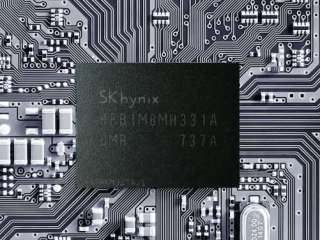
SK hynix supplies memory chips, including DRAM, NAND flash, and CMOS image sensors, to global customers. Its products are used across servers, AI systems, mobile devices, PCs, consumer electronics, automotive applications and networking equipment.
It is one of the world’s leading memory chipmakers, alongside Samsung Electronics and Micron Technology.
SK hynix held the second-largest share of the global DRAM market by revenue in the first quarter of 2026, with 29%, behind Samsung Electronics, which led with 38%, according to Counterpoint Research. Micron Technology ranked third.
In high-bandwidth memory, SK hynix remained the market leader with a 58% revenue share, down from 69% a year earlier, according to Counterpoint.