




Can data centre owners still afford to ignore deployability?
The digital infrastructure industry has spent much of the past decade solving a relatively familiar problem: how to build enough capacity to keep pace with gro...
The digital infrastructure industry has spent much of the past decade solving a relatively familiar problem: how to build enough capacity to keep pace with gro...


 Data4 CEO warns AI demand surge is outpacing data centre capacity as industry struggles to keep up
In this interview from Paris, Olivier Micheli, pr...
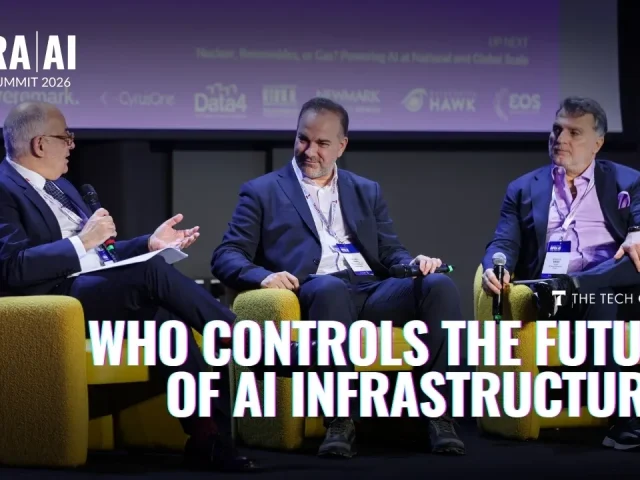 InfraAI’26: National Security vs Innovation: Who Controls the Future of AI Infrastructure?
This panel session examined the growing tension b...
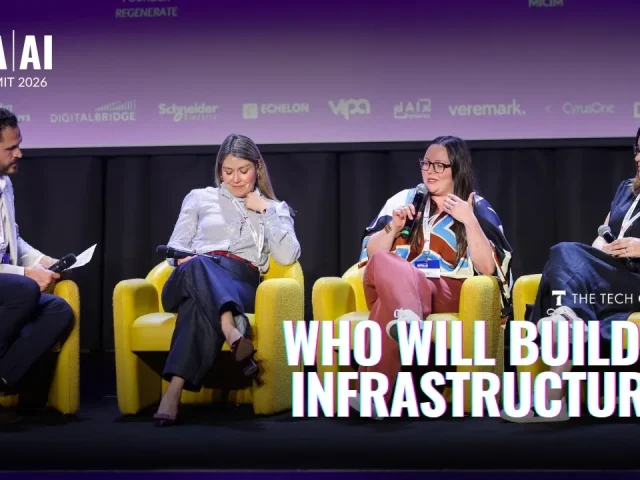 InfraAI’26: Who Will Build AI Infrastructure? The Talent and Pressure Challenge
This panel explored the human challenges behind t...

 Ep. 38 - The Land of Giants: Power, Private Capital and the AI Infrastructure Race, with Krupal Raval
In this episode of Great Business Minds, ...
 Ep. 34 - Inside the high-stakes race to keep Europe’s data at home, with Olivier Micheli
At the Datacloud Global Congress 2025 in Cann...
 Ep. 32 – From Dotcom to AI: Building Japan’s and the World’s Digital Infrastructure Gardens with Dan Kesler and Bill Schrader – Great Business Minds
Welcome to another episode of the Great Business ...
The agreement between the United States and Iran to end hostilities and reopen the Strait of Hormuz has largely been viewed through the len...
Alphabet Inc. will join the Dow Jones Industrial Average on Monday, placing another AI and cloud infrastructure heavyweight inside one of Wall Street’s most visible benchmarks.
Editor APAC, The Tech Capital
4 Mins
{{formattedDate}}
When Alphabet Inc. (Nasdaq: GOOGL) joins the Dow Jones Industrial Average on 29 June, it will mark a wider shift in how Wall Street views AI infrastructure and its role in the economy.
So why now? Part of it comes down to the Dow’s old-fashioned design. Unlike the S&P 500, it is price-weighted, which means share price matters more than total market value. That made Alphabet harder to include before its 2022 stock split, when its share price was much higher.
Alphabet is replacing Verizon Communications, removing the last classic, dedicated telco provider from the index. The change reflects how digital and connectivity infrastructure are being redefined in public markets, with cloud, AI, and compute taking on a larger role in how investors read the economy.
Telecoms built the networks that connected the internet. Hyperscalers transformed that connectivity into cloud platforms. Now, AI is reshaping the next computing cycle, driven by unprecedented investment in data centres, semiconductors, power infrastructure and energy.
Verizon’s exit doesn’t mean networks become less important. The AI economy still depends on fibre networks and reliable data transmission. What has changed is where the market now sees the next layer of value being created, increasingly with the companies deciding where new compute capacity goes and how quickly it can scale.
This is why Alphabet’s inclusion matters. The Dow doesn’t change quickly, and its additions tend to reflect what the market now sees as central to the US economy. In this case, the signal is clear. Digital infrastructure has moved beyond being a specialist technology story. It has become a macroeconomic one.
Alphabet also enters the Dow during one of the largest AI infrastructure spending cycles in the market. The company expects capital expenditures of US$180 billion and US$190 billion this year (2025: US$91.45 billion), much of it directed into data centres, servers, networking equipment, and the cloud infrastructure needed to support AI demand.
The move puts five of the Magnificent Seven inside the Dow, alongside Microsoft, Apple, Amazon, and Nvidia. These companies are not only leading equity markets, they are also driving a growing share of global demand for computing capacity, electricity, semiconductors, and data centre infrastructure.
The speed of this shift is striking. Railways, steel, oil, automobiles, and telecoms each took decades to reshape stock markets and the wider economy. Cloud computing became foundational over the course of more than a decade. AI infrastructure is compressing a similar transformation into just a few years.
That is the theme The Tech Capital has been tracking for the past two years. Digital infrastructure is no longer a specialist corner of the market. It is becoming part of the wider economic conversation, as AI demand pulls data centres, power, and connectivity into the centre of corporate and investor strategy.
For Alphabet, the move strengthens the company’s corporate narrative at an important moment. Google has been defending the scale of its AI spending over the past few years and proving it can compete with Microsoft, Amazon, and Nvidia across the next phase of cloud and AI. A seat in the Dow could give Alphabet a stronger blue-chip frame as investors are watching whether its AI infrastructure spending can turn into lasting revenue.
Whether Alphabet’s inclusion proves to be symbolic or historic will only become clear over time. One conclusion, however, already appears difficult to dispute: digital infrastructure is no longer simply supporting the economy from behind the scenes. It is increasingly shaping economic growth, capital allocation, and national competitiveness.
That reality is now influencing not only investors and boardrooms, but also policymakers, with the Trump administration placing AI infrastructure, energy, and domestic technology leadership at the centre of its economic agenda.

Editor APAC, The Tech Capital
3 Mins|June 29, 2026

4 Mins|June 29, 2026
3 Mins|June 26, 2026
 The Week Ahead: G7 puts AI, security and digital resilience in focus
The upcoming G7 meeting in France arrives at a pivotal moment for the world's advanced economies. A...
 The Week Ahead: Nvidia’s Taiwan push enters a harder AI compute race
Nvidia’s (NASDAQ: NVDA) founder and CEO Jensen Huang has returned to Taiwan ahead of next week’...
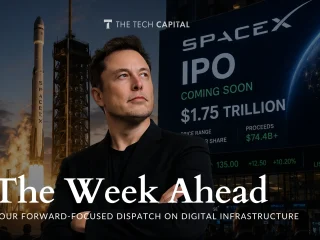 TWA | The SpaceX IPO and the great transfer of risk
Next week, investors are expected to witness one of the most significant public market events of th...
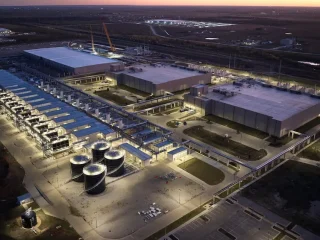 Alphabet upsizes equity raise to $85 billion to fund AI infrastructure
Google parent Alphabet Inc. (NASDAQ: GOOG) has expanded its planned equity fundraising from US$80 b...
 Google commits $1.5 billion to Alabama data centre expansion
Google (NASDAQ: GOOG) will invest US$1.5 billion in 2026 and 2027 to expand its data centre ca...
 Anthropic eyes direct data centre leases backstopped by Google
Frontier AI model developer Anthropic has signed multiple letters of intent to directly lease data ...