There is a version of the AI infrastructure story that sounds very clean. Capital is flowing. Hyperscalers are scaling. Governments are supportive. Europe, finally, is moving with some urgency. And then there is the version people are discussing more quietly.
Projects that looked straightforward six months ago are slowing down. Power that was expected to be available isn’t. Timelines are stretching, sometimes without much explanation. In a few cases, sites are simply not moving forward, not because the demand isn’t there, but because the conditions to build them properly are harder than expected. The shift is subtle, but it matters.
For years, the industry has been conditioned to think in terms of capital constraint. If demand was strong enough, the money would follow. And increasingly, it has. Funds have been raised. Banks are active. Infrastructure capital, broadly speaking, is not sitting on the sidelines. But capital doesn’t solve everything.
France is a good place to look at this more closely.
On paper, it has many of the ingredients the market is looking for. A relatively stable energy base. Political support for digital infrastructure. A growing domestic AI ecosystem, with companies like Mistral AI helping to anchor the narrative that Europe can build its own capabilities rather than relying entirely on imports.
It is, in many ways, exactly the kind of market investors have been searching for. And yet, even here, things are not straightforward.
Grid access is becoming more contested. Permitting remains uneven depending on the municipality. And while there is no shortage of ambition, translating that into actual, deliverable projects is proving slower than many expected.
None of this is dramatic in isolation. But taken together, it starts to change the conversation. At the same time, the demand side is not waiting.
The large platforms such as Amazon Web Services, Google Cloud, Microsoft Azure, continue to expand, but they are now operating alongside a newer layer of AI-native companies and neocloud providers that behave differently.
They move faster. They are less tolerant of delay. Their infrastructure requirements are denser, more specialised, and in some cases less predictable. That combination is uncomfortable.
Because while demand is accelerating, supply is becoming more conditional. Not in theory, but in practice, in whether a site can secure power, whether a project can clear permitting in time, whether the infrastructure can actually be delivered at the pace the market now expects.
This is where the conversation starts to shift from strategy to execution. Not “where should we build?”, but “where can we build, realistically, in the next 12 to 24 months?”
Not “is there capital?”, but “how is that capital being structured around risk that is increasingly operational rather than financial?”
Not “who wants capacity?”, but “who can actually deliver it?”
Those are less comfortable questions. They are also the ones that tend to define markets.
This is also, more or less, the backdrop to Paris.
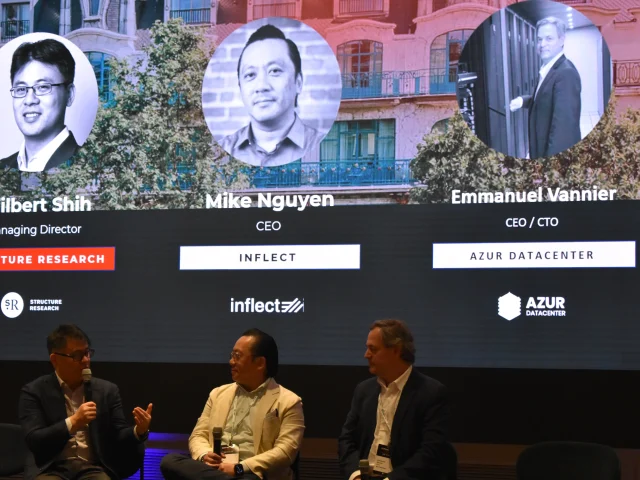
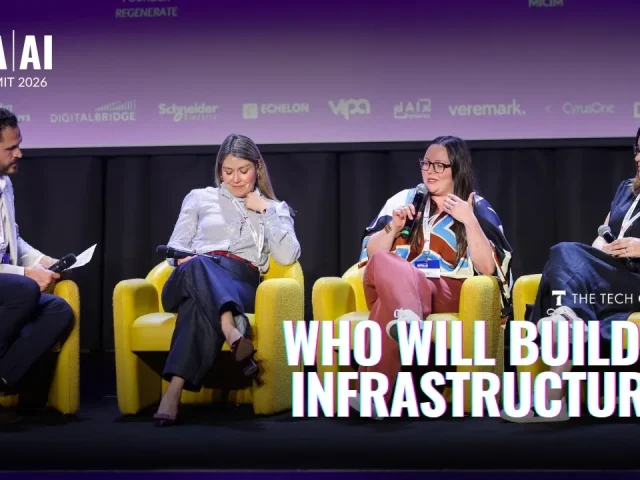
The Tech Capital and Structure Research’s infra/CAPITAL Summit on April 15-16 is not happening at the beginning of the cycle, when everything still feels open. It is happening at the point where constraints are starting to show themselves, and where decisions begin to narrow. The agenda reflects that shift.
There are conversations about where the next capacity will and just as importantly, will not be built. About how AI demand is changing the buyer landscape. About energy, and the increasingly decisive role of grid access in determining growth.
There are also quieter questions underneath all of that, around how capital is underwriting projects that are becoming harder to execute on time, and how operators are prioritising between opportunities that, on paper, all look attractive.
The mix of people expected in the room says quite a lot on its own. On one side, the demand layer: Amazon Web Services, Alibaba Cloud, and European players such as Mistral AI.
On the other hand, the operators who are having to turn that demand into physical infrastructure: Digital Realty, Iron Mountain, NTT Global Data Centers, Data4, VIRTUS Data Centres.
And then the capital behind it all, including Ardian, Macquarie Group, SMBC, RBC Capital Markets, Newmark, trying to price, structure, and deploy into a market where the risks are shifting.
Put differently, it is not a room built around announcements. It is a room built around decisions.
There is still a lot of optimism in the European AI infrastructure story. That hasn’t gone away. But it is now sitting alongside something else, a growing recognition that building at scale, in Europe, is not just a question of capital or intent. It is a question of whether the system, as it currently exists, can deliver.
Paris won’t answer that fully. But it will probably make it clearer where the limits are starting to appear.
Learn more about the event here: https://www.infracapitalsummit.com/