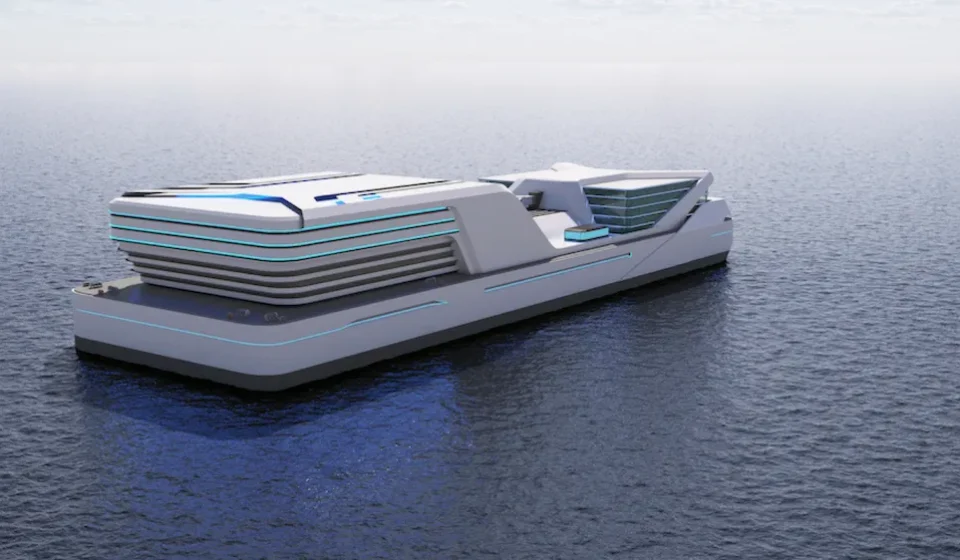
Samsung Heavy Industries (SHI) is targeting commercial deployment of its first floating data centre by the second quarter of 2028, according to TradeWinds, as the South Korean shipbuilder steps up efforts to bring offshore compute infrastructure to market.
The company is pursuing several potential projects tied to that timeline.
TradeWinds reported that SHI has signed a memorandum of understanding with Greek shipping group Capital and Lloyd’s Register to develop floating data centre projects.
Under the agreement, SHI will lead technology development, Capital will support project sourcing and investment, while Lloyd’s Register will advise on regulatory and classification requirements.
The push follows a series of recent milestones. SHI has received Approval in Principle for its 50MW floating data centre concept from the American Bureau of Shipping and Lloyd’s Register, an early regulatory step for the design.
The concept is intended to support data-intensive AI workloads offshore and includes its own power generation system, which could reduce reliance on land-based grid connections.
At Posidonia 2026 in Athens, SHI also signed agreements with Capital Clean Energy Carriers, Lloyd’s Register and US AI server manufacturer Supermicro as part of its wider commercialisation effort.
Separately, SHI partnered in April with Mousterian Corporation, also known as M3, to develop floating and water-adjacent data centre infrastructure.
Under that cooperation, M3 is responsible for development, site origination, tenant sourcing and project delivery, while SHI will provide engineering, fabrication and delivery capabilities for floating maritime assets.
The floating data centre model is gaining attention as AI demand increases pressure on land availability, grid capacity and power supply.
Offshore facilities can use seawater for cooling and draw on nearby or offshore energy sources, including wind and wave power, to ease pressure on land-based infrastructure.
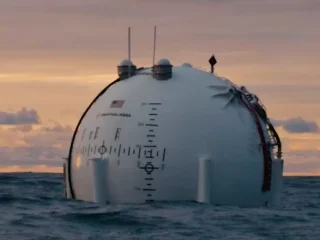
SHI is not alone in exploring the concept. Keppel Data Centres has developed plans for modular floating data centre parks using seawater cooling and alternative fuels such as hydrogen, while Panthalassa recently raised US$140 million to develop ocean-powered AI data centres.