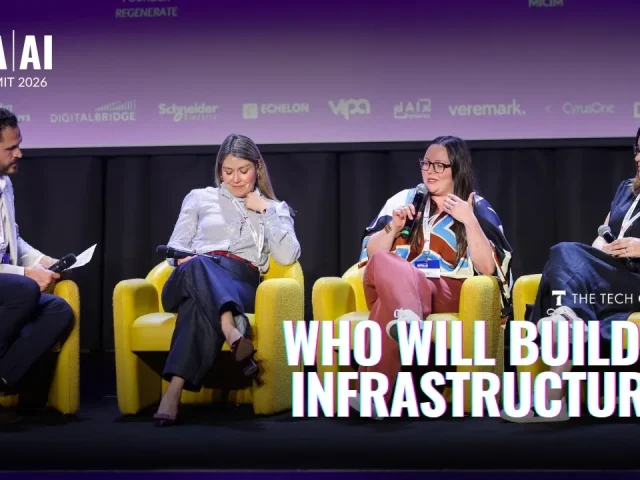
A report on the panel discussion at infra/CAPITAL Summit 2026 in Paris, hosted by The Tech Capital and Structure Research
After two years dominated by inves...
Investors, operators and policymakers are moving beyond AI hype to the practical realities of building global compute infrastructure. Later this month, global industry leaders will gather in Athens to examine the capital, energy and supply chain questions now shaping deployment.
Artificial intelligence has rapidly moved from a technology narrative to an infrastructure reality.
Over the past 18 months, the industry has witnessed an unprecedented acceleration in capital allocation towards data centres, compute clusters, power generation and connectivity networks designed to support the next generation of AI workloads. Hyperscale cloud providers, private equity funds, sovereign investors and infrastructure developers are all positioning themselves to meet demand that many analysts now believe will reshape global digital infrastructure investment over the coming decade.
Yet while the market narrative around AI continues to dominate headlines, the practical questions surrounding how this infrastructure will be financed, powered and delivered at scale remain far from settled.
Across boardrooms, investment committees and project development teams, a number of critical debates are now shaping the next phase of AI infrastructure deployment.
One of the most immediate concerns is power.
The scale of electricity required to support large-scale AI training clusters has quickly become one of the defining constraints on industry expansion. Hyperscale operators are increasingly seeking multi-gigawatt capacity across multiple regions, forcing developers and governments alike to rethink energy procurement strategies. In many markets, the availability of grid capacity, renewable power agreements and long-term energy contracts is becoming the primary determinant of where new AI data centres can be built.
Closely tied to power availability is the question of capital.
The financial requirements associated with AI infrastructure deployment are already measured in the hundreds of billions of dollars, with projections suggesting the figure could reach into the trillions over the next decade. Traditional data centre financing models are evolving as investors evaluate how best to structure funding for AI-specific facilities that often require significantly higher power densities and specialised infrastructure.
Institutional capital, private equity, infrastructure funds and sovereign wealth investors are all increasing their exposure to digital infrastructure, yet many remain cautious as they assess long-term demand visibility and the contractual structures underpinning large-scale AI deployments.
Supply chains present another challenge.
The availability of GPUs, advanced cooling systems, specialised semiconductors and high-capacity power infrastructure has become a critical factor influencing project timelines. Developers are increasingly navigating global supply bottlenecks, geopolitical tensions and complex procurement strategies as they seek to secure the components required to build next-generation compute facilities.
At the same time, governments and regulators are beginning to play a more active role in shaping the AI infrastructure landscape.
From national AI strategies and data sovereignty considerations to grid planning and environmental regulation, policymakers are recognising that the physical infrastructure underpinning artificial intelligence will become a strategic economic asset.
These interconnected challenges are increasingly defining the conversation across the digital infrastructure ecosystem.
For investors, the question is where capital can be deployed most effectively as AI infrastructure evolves. For operators and developers, the focus is on execution: securing power, managing supply chains and delivering facilities capable of supporting the next generation of high-density compute.
For policymakers, the challenge lies in balancing economic opportunity with the infrastructure and energy requirements that large-scale AI deployment demands.
Taking place from 30 March to 1 April on the Athenian Riviera, the summit will convene investors, infrastructure developers, cloud providers, energy specialists and policy leaders to examine the capital flows, power strategies and operational challenges shaping AI infrastructure deployment.
Discussions throughout the programme will focus on the practical realities of scaling AI infrastructure, from financing models and energy procurement strategies to supply chain resilience and geopolitical considerations affecting global compute deployment.
Athens has increasingly emerged as a strategic meeting point for these conversations. Positioned at the intersection of Europe, the Middle East and Africa, the region has become an important hub for subsea connectivity, energy infrastructure and digital infrastructure investment, reflecting the broader geographic shifts occurring across the global data centre landscape.
As AI continues to reshape the digital economy, the focus across the industry is shifting away from speculation and towards execution.
The next phase of AI infrastructure will not simply be defined by technological capability, but by the ability of investors, operators and governments to coordinate capital, energy and supply chains at an unprecedented scale.
Those conversations are already underway.
Later this month in Athens, many of the leaders responsible for delivering this infrastructure will be in the same room.
InfraAI Global Summit 2026 Athens | 30 March – 1 April
Senior leaders from across digital infrastructure, investment, energy and cloud will convene to examine the physical and financial foundations underpinning artificial intelligence at scale.