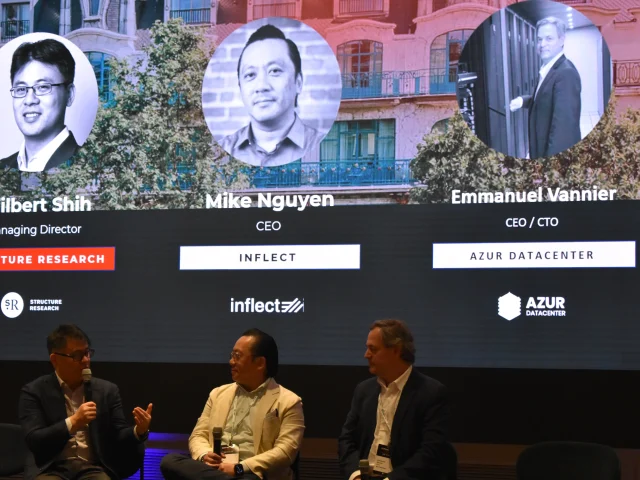
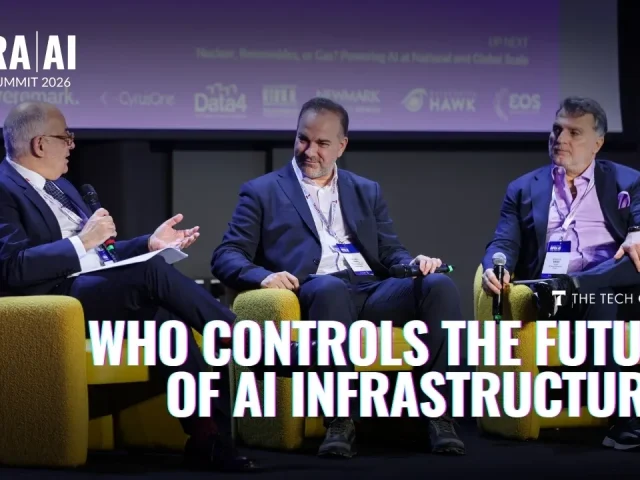
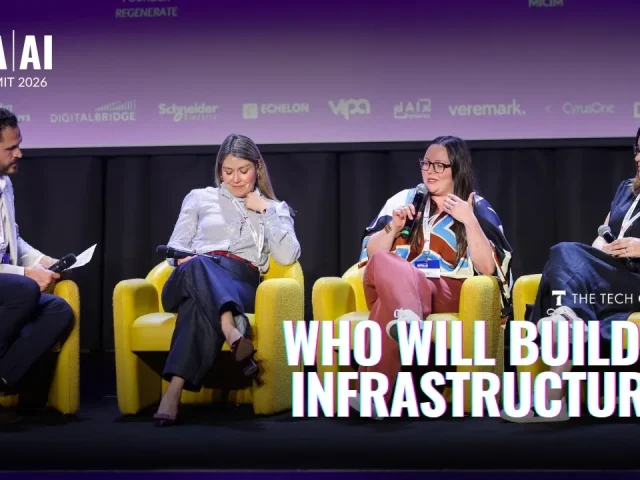
A report on the panel discussion at infra/CAPITAL Summit 2026 in Paris, hosted by The Tech Capital and Structure Research
After two years dominated by inves...
Welcome to The Week Ahead! Your Forward-Focused Dispatch on Digital Infrastructure. Delivered every Monday exclusively via LinkedIn, this newsletter breaks down the most significant finance and investment developments and trends in the world of digital infrastructure this week.
Welcome to The Week Ahead! Your Forward-Focused Dispatch on Digital Infrastructure. Delivered every Monday, this newsletter breaks down the most significant finance and investment developments and trends in the world of digital infrastructure this week. Gain access to all our premium content, including news, features, videos, and podcasts, by registering for a The Tech Capital account here.
IN FOCUS
In this week’s newsletter, we look at:
Cloud Cover: Hyperscalers cast long shadows in data centre forecast;
Quantum leaps and global summits: From Silicon Valley to the Athenian Riviera;
Longreads: The French AI Revolution and How to Finance Subsea Cable Projects.
Dear Reader,
Welcome to March! If you are scratching your head on where the first two months of the year have gone, you are not alone. As we stride into the third month of 2025, the pace of innovation and progress in the sector remains unabated, bringing forth a plethora of developments worthy of your attention.
But first, our panel of distinguished judges is now diligently evaluating entries for this year’s The Tech Capital Global Awards. We received a record-breaking 118 submissions, and we are pleased to announce that the shortlist will be revealed on 12 March, with the winners to be unveiled at The Tech Capital’s International Finance Forum & Global Awards in London on 13 May. This premium event is a true convergence of the brightest minds and most innovative companies in the digital infrastructure landscape..
We are also approaching capacity for our highly anticipated InfraAI Global Summit. This exclusive, retreat-style event is set to take place on the picturesque Athenian Riviera from 26-27 March. We urge you to secure your place promptly to join an elite gathering of digital infrastructure leaders, hyperscale enterprises, investors, and policymakers. Further announcements regarding the summit will be made this week, adding to the event’s already impressive roster.
And within the theme of AI and the future of computing, in a significant advancement for quantum computing, Microsoft has unveiled its Majorana 1 chip. The device is designed to harness the unique properties of Majorana particles to create topological qubits, potentially resolving one of quantum computing’s most persistent challenges: error correction.
The Majorana 1 chip’s architecture – so claims Microsoft – offers enhanced stability compared to conventional qubits, leveraging the ‘braiding’ characteristics of Majorana particles. This breakthrough could accelerate the practical application of quantum computing across various industries, from pharmaceutical research to energy system optimisation and beyond.
Microsoft’s partnership with the U.S. Defense Advanced Research Projects Agency (DARPA) aims to develop an industrial quantum device by 2033, and the timeline has sparked considerable interest within the scientific community.
However, while the potential of quantum computing is undeniably exciting, it is prudent to approach such advancements with measured optimism. Previous technological promises, such as Microsoft’s 2017 presentation on DNA storage in London, which we attended, serve as a reminder that the path from theoretical breakthrough to practical application can be long and complex.
The advent of quantum computing also presents new challenges, particularly in the realm of cybersecurity. The potential ability of quantum computers to compromise existing encryption methods has spurred a race to develop quantum-resistant cryptographic protocols.
Concurrently, China’s quantum research efforts, bolstered by substantial government support, continue to progress rapidly. Could we be heading towards a Stargate vs DeepSeek 2.0 moment?
The quantum computing sector is also witnessing increased venture capital investment in quantum software development, and the diversification beyond hardware signals a maturing ecosystem ripe for innovation and practical applications.
According to a report by Fortune Business Insights, the global quantum computing market is projected to reach US$2.2 billion by 2026, with a compound annual growth rate (CAGR) of 56% from 2019 to 2026. We are just scratching the surface on all this.
To that end, we invite you to “scratch the surface” with us by joining The Tech Capital across different social media platforms and subscribing to our daily newsletter.
Cloud Cover: Hyperscalers Cast Long Shadows in Data Centre Forecast
As hyperscale data centre demand reaches unprecedented levels, a strategic shift in workloads deployments at Microsoft ignited a debate on the competitive landscape, with Oracle emerging as a key player alongside tech giants Google and Meta.
L to R: Satya Nadella, Chairman and CEO, Microsoft and Larry Ellison, Oracle Chairman and CTO. Image courtesy: Microsoft
Here’s what happened:
Last week, headlines of Microsoft (NASDAQ: MSFT) cancelling data centre leases with at least two US operators sent shockwaves throughout the industry and became a big talking point online and at conferences on both sides of the Atlantic.
The news, based on a TD Cowen market update file, also mentioned that Microsot had “pulled back on the conversion of SOQs to leases and is redirecting capital earmarked for international deployment to the US,” according to the note.
In a second note, TD Cowen wrote that the data centre industry is witnessing a significant uptick in demand, with aggregate third-party hyperscale requirements showing a marked year-on-year increase.
This surge is underpinned by both top-down demand pipeline assessments and bottom-up hyperscale data centre activity checks, which is what happened at Microsoft.
The landscape is not uniformly positive across all players and for the Office giant, which had been leading the charge in data centre leasing throughout 2023 and the first half of 2024, this retreat is believed to be part of a broader shift in the allocation of OpenAI workloads, with Oracle emerging as a significant beneficiary of this redistribution.
According to TD Cowen, Oracle’s ascendancy in the data centre space has demonstrated a material ramp-up in requirements over the past three months, operating at a scale previously unseen from the tech giant. The surge is largely attributed to ‘The Stargate Project’, with multiple requirements exceeding 300MW identified in Texas and Johor.
Furthermore, Oracle is expanding its footprint into non-traditional markets, specifically for training purposes, with indications that these new facilities are intended to support OpenAI workloads.
And this has repercussions elsewhere too. DigitalBridge, which plays a big role in the hyperscale data centre space, reported a substantial increase in its leasing pipeline. The company’s 4Q24 earnings call revealed a pipeline expansion to 6.2GW entering 2025, up from “a little over” 5GW at the start of 2024 – representing an impressive year-on-year growth of approximately 22%. The trend is not isolated, as other private hyperscale-oriented platforms are projecting 2025 to be a record-breaking year for leasing, aligning with the timing of their upcoming capacity.
While Microsoft’s retreat and Oracle’s advance have reshaped the competitive landscape, other tech behemoths are also making significant moves. Meta, which had previously scaled back its data centre ambitions in late 2022, has re-entered the market with renewed vigour and is lining up to deploy US$200 billion or more in new infrastructure. Recent checks indicate multiple requirements exceeding 100MW across several U.S. markets, signaling a notable year-on-year increase in demand.
Google, too, is actively seeking to bridge a projected 2GW capacity deficit in the U.S. by 2026. The company has been particularly active in recent weeks, negotiating capacity with a focus on speed to market. This urgency suggests that Google’s third-party data centre demand is likely to surpass 2024 levels, TD Cowen analysts noted.
Amazon Web Services (AWS) continues to maintain a consistent presence in the market, with large requirements particularly noted on the West Coast. This steady demand from AWS, coupled with the increased activity from Meta, Google, and Nvidia, aligns with the overall industry trend of growing hyperscale requirements.
The data centre industry is also seeing increased interest from artificial intelligence (AI) chip manufacturers, notably Nvidia. As AI workloads continue to proliferate, the demand for specialised infrastructure to support these compute-intensive operations is rising in tandem.
Here’s our take:
The current dynamics in the hyperscale data centre market reflect a broader shift in the tech industry, driven primarily by the explosive growth of AI and machine learning workloads. And things are happening fast, so fast that sometimes things blow up out of all proportion.
The redistribution of OpenAI’s infrastructure requirements from Microsoft to Oracle represents a significant realignment in the industry, potentially signaling a new chapter of competition among cloud providers.
The shift underscores the strategic importance of data centre capacity in the AI arms race. As companies vie for dominance in AI development and deployment, the ability to secure and scale data centre resources quickly becomes a critical competitive advantage. Oracle’s rapid expansion and entry into new markets for AI training purposes demonstrates the company’s ambition to position itself as a key player in the AI infrastructure space, for example.
The resurgence of Meta’s data centre demand, following a period of retrenchment, indicates a renewed focus on infrastructure to support its core business and potentially new AI-driven initiatives. Will it work for Mark Zuckerberg? With a Trump White House sitting in Washington DC, there are no major hurdles in sight for the Facebook-parent company – but again, things are changing very quickly at the moment.
Google’s urgent efforts to address its projected capacity deficit and the company’s focus on speed to market in securing new capacity reflects the time-sensitive nature of these infrastructure decisions.
The consistent demand from Amazon Web Services, coupled with increased activity from other major players, points to a broader trend of sustained growth in cloud computing and digital services. This trend is likely to continue as businesses across various sectors accelerate their digital transformation efforts and increase their reliance on cloud-based solutions.
The entry of AI chip manufacturers like Nvidia into the data centre space signals a new frontier in specialised infrastructure. As AI workloads become more prevalent and sophisticated, the demand for purpose-built hardware and optimised data centre designs is likely to grow, potentially reshaping the industry’s approach to infrastructure development.
Whilst data is the new oil, as we have heard for many years, specialised infrastructure is now the pump jack needed to get that data oil flowing.
Ultimately, the projected record leasing year in 2025 suggests that operators and investors remain confident in the long-term growth prospects of the sector. However, this growth is not without challenges, as it has been since the beginning of time. And where there are challenges, there are always opportunities. One company reassessing plans does not incite the premonition of the end of it all, it could simply just be another exit lane, another avenue for construction.
LONG READS
The French AI Revolution: Can Gallic data centres outpace Silicon Valley?
In the wake of President Macron’s ambitious €100 billion AI investment initiative, leveraging the nation’s triad of energy resources, intellectual capital, and infrastructure, a key question emerges: Can this Gallic technological renaissance successfully challenge the entrenched AI hegemony of the United States and China, reshaping the global artificial intelligence landscape? Read more here
Financing strategies for global subsea infrastructure
Despite the involvement of various players, funding models vary significantly. Hyperscalers and larger telecom carriers tend to self-finance their projects, while smaller telcos and private initiatives often secure funding from government institutions such as the EU or from development banks. Read more here
Japan’s road to APAC digital infrastructure dominance: Unparalleled potential and addressable challenges
With the world’s second most reliable power grid, globally leading generation capacity, a growing low-carbon energy portfolio, unparalleled international and domestic fiber connectivity, a robust industrial base, strong government support, and a foundation rooted in the rule of law and democracy, Japan has all the essential elements for success, writes Dan Kesler, co-founder of Digital Garden Tokyo. Read more here
QUOTE OF THE WEEK
WEEK IN PREVIEW
Hut 8 Corp. (HUT) – Monday, March 3, 2025: Hut 8 Corp. will release financial results for the full year of 2024 before the market opens on Monday. Analysts expect earnings per share of -$0.18, reflecting ongoing challenges in the cryptocurrency mining sector. Investors will be keen to hear about the company’s strategies for navigating the volatile crypto market, updates on their mining operations, and any progress in their high-performance computing and hosting services.
Marvell Technology, Inc. (MRVL) – Wednesday, March 5, 2025: Marvell Technology will conduct a conference call following the release of its fourth fiscal quarter and fiscal year 2025 financial results. The consensus EPS estimate is $1.08, reflecting the company’s consistent profitability. Investors will be watching for updates on Marvell’s performance in the data centre and AI segments, as well as its progress in 5G technology adoption.
Broadcom Inc. (AVGO) – Thursday, March 6, 2025: Broadcom will announce its first quarter fiscal year 2025 financial results. Analysts expect earnings per share of $1.42, which would represent a slight increase from the previous quarter. Key areas of focus will be Broadcom’s performance in cloud services, AI integration, and its semiconductor business. Investors will also be interested in any updates on the company’s recent acquisitions and their integration progress.
TTC CONFERENCES
The InfraAI Summit 2025, hosted in the Athenian Rivierta, Greece, will be a pivotal event for the global AI and infrastructure sectors. The exclusive gathering brings together industry leaders, investors, policy makers, and innovators to explore the foundations of AI-driven economies. With a focus on digital infrastructure, including data centres, cell towers, and fibre networks, the summit will address the multi-trillion capital influx expected in the next five years.
The event promises a rich agenda, featuring over 40 expert speakers, panel discussions on cutting-edge topics such as generative AI’s impact on infrastructure and quantum computing, and networking opportunities against the backdrop of the Athenian Riviera. Attendees will gain invaluable insights into future-focused strategies, innovative financing models, and the critical intersection of AI, energy, and sustainability.
Join us on 27th March 2025 to shape the future of AI infrastructure and investment.
Microsoft cancelled data centre leases in potential oversupply situation says TD Cowen – Full Story
Meta explores massive $200 billion data centre for AI expansion – Full Story
Crown Castle delays 10-K filing, expects $5 billion impairment charge for fibre business – Full Story
Meta in talks for $35 billion data centre financing, led by Apollo Global Management – Full Story
Stargate to house 75% of OpenAI compute by 2030 – Full Story
Digital Realty, euNetworks, Digital Edge announce leadership changes – Full Story
Cloud Capital’s new closed-end fund targets data centre investments – Full Story
SpaceX Falcon 9 carries data centre to the Moon – Full Story
Blackstone looks to ABS market to fund AirTrunk expansion – Full Story
Singapore unveils guidelines for data centre and cloud operators – Full Story
DC-Datacenter-Group expands portfolio with acquisition of DCP shares– Full Story
CoreWeave eyes $4 billion IPO, valuation could exceed $35 billion – Full Story
WATCH ON THE TECH CAPITAL
At PTC 25, Chris Kenny, founder and managing director of GCI, shared details on the company’s latest venture—developed in partnership with Asia Pacific Land (APL)—which will initially deliver 120MW of power by 2027, with a second phase expanding to 250MW and long-term potential reaching 650MW.
InfraAI Summit’25, by The Tech Capital Athens Riviera – 26-27 March 2025 LEARN MORE
The Tech Capital International Finance Forum & Global Awards London– 12-13 May 2025 LEARN MORE
The Tech Capital LATAM Finance Forum São Paulo – 03 July 2025 LEARN MORE
The Tech Capital APAC Finance Forum Singapore – 25 September 2025 LEARN MORE
infra/STRUCTURE Summit Las Vegas – 15-16 October 2025 LEARN MORE
The Tech Capital Middle East & Africa Finance Forum Abu Dhabi – 01 December 2025 LEARN MORE
@2021-2025 Mondego Media Group Ltd. All Rights Reserved.TTC may receive compensation for some links to products and services in this email. Offers may be subject to change without notice. The Tech Capital part of Mondego Media Group Ltd., Devonshire House, Level 1 (78), One Mayfair Place, London W1J 8AJ, United Kingdom


 Facebook
 Youtube
  TikTok
 Threads
 WhatsApp