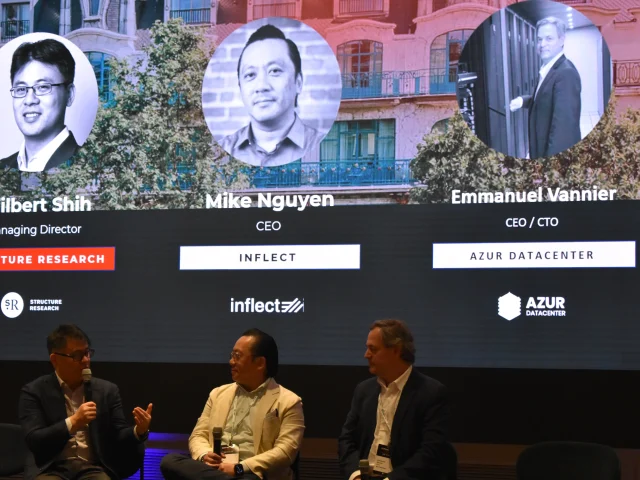
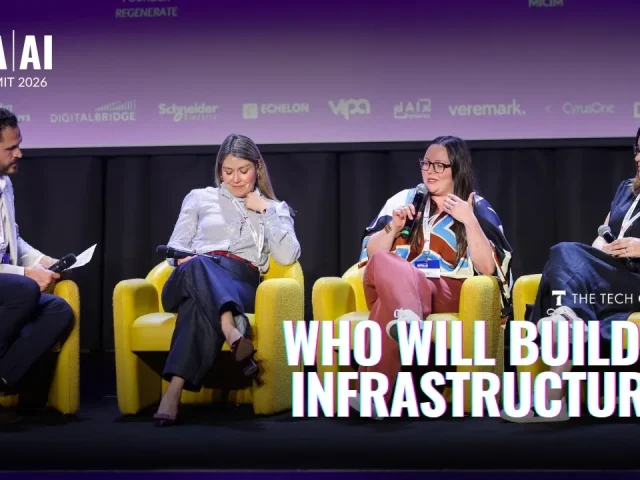
A report on the panel discussion at infra/CAPITAL Summit 2026 in Paris, hosted by The Tech Capital and Structure Research
After two years dominated by inves...
Welcome to The Week Ahead! Your Forward-Focused Dispatch on Digital Infrastructure. Delivered every Monday exclusively via LinkedIn, this newsletter breaks down the most significant finance and investment developments and trends in the world of digital infrastructure this week.
Welcome to The Week Ahead! Your Forward-Focused Dispatch on Digital Infrastructure. Delivered every Monday, this newsletter breaks down the most significant finance and investment developments and trends in the world of digital infrastructure this week. Gain access to all our premium content, including news, features, videos, and podcasts, by registering for a The Tech Capital account here.
IN FOCUS
In this week’s newsletter, we look at:
Tariffs and transformer shortage amp up pressure on data centres;
Energy and semiconductor giants to report results;
Tech Capital Global Awards 2025 extends the submission deadline to February 26.
The ’35 Under 35′ list will spotlight individuals under the age of 35, born after March 27, 1990, who are making significant contributions to the field of digital infrastructure. Submissions close on February 26.
Dear Reader,
There is never a dull week in the digital infrastructure landscape which is undergoing a profound transformation, with data centres and AI at the forefront of this (r)evolution. Recent developments have shone a light on the sector’s pivotal role in shaping the global economic and societal landscape.
Recently, we learned that data centres and digital infrastructure have emerged as the primary drivers of new industrial projects, surpassing e-commerce. The Winter 2025 Allen Matkins/UCLA Anderson Forecast California Commercial Real Estate Survey reveals that 38% of respondents now cite these sectors as the leading catalyst for development, a significant increase from 17% in the previous survey.
The surge in AI-related data centre development has reached unprecedented levels. Annualised spending on new data centre construction has hit a record $31.5 billion, propelling the development pipeline to nearly 50 million square feet by the end of 2024 – double the volume from just five years ago. This expansion reflects the urgency with which companies are building capacity to meet AI and cloud computing demands. Investor interest remains robust, with capital raises ranging from $50 million to over $5 billion per project.
However, this rapid growth faces significant challenges, particularly in power supply. Projected demands from existing and planned U.S. data centres alone exceed utility supply by approximately 50%. This constraint is driving operators and developers to explore new avenues, including natural gas-fired power plants and investments in emerging technologies such as small nuclear reactors (SMRs).
The search for power and suitable development sites is opening up new markets, including economically underserved regions.
In the past 24 months, an estimated 24% of all industrial-zoned development site acquisitions were for data centre development. Hyperscalers are leading this trend, accounting for over 10% of all commercial development site purchases in 2024, regardless of site zoning.
The impact of AI and digital infrastructure extends beyond the industrial sector, influencing office markets as well. In key tech hubs such as San Francisco and Silicon Valley, the growing demand for AI talent has fuelled an uptick in office leasing, leading to the first drop in office vacancies in San Francisco since 2019.
On our side, we are pleased to announce that we are nearing the launch of the first InfraAI Global Summit in Athens. This exclusive, retreat-like experience is close to capacity, with the speaker lineup and additional partners to be announced soon.
Furthermore, we have extended the deadline for the Global Awards to 26 February. For more information, please visit our website.
Stay tuned for another exciting announcement regarding our events portfolio in the near future too…
Watt a Shock: Trump’s Tariffs Could Power Down Data Centre Expansion
Tariffs and transformer shortage amp up pressure on data centres as big tech’s cloud expansion hits a roadblock.
President Donald Trump in Washington, D.C. (Official White House Photo by Molly Riley)
Here’s what happened:
In a week of significant developments for the digital infrastructure industry, concerns have emerged about the potential impact of President Donald Trump’s steel and aluminium tariffs on data centre growth. The tariffs, experts warn, could worsen an existing shortage of key components in the electric grid, particularly transformers, which are crucial for data centre operations.
Jeff Currie, chief strategy officer of energy pathways at Carlyle, stressed this issue during an interview on CNBC’s “Squawk Box”. Currie, a commodity analyst, pointed out that transformers, essential for distributing electricity from power plants to end customers like data centres, are fundamentally “big chunks of metal”. He argued that tariffs disrupting supply chains would only aggravate the current shortage situation.
The warning comes at a time when Big Tech companies are already grappling with challenges in their cloud segments. Alphabet (NASDAQ: GOOGL), Amazon (NASDAQ: AMZN), and Microsoft (NASDAQ: MSFT) all missed revenue targets for their cloud businesses in their most recent quarterly financial results, leading to a decline in their stock prices. Microsoft’s Azure cloud business, in particular, has been struggling with supply shortages, while demand for Alphabet’s AI products is outstripping available capacity.
Anat Ashkenazi, Alphabet’s chief financial officer, acknowledged the supply-demand imbalance during the company’s 4 February earnings call, saying: “We are in a tight supply-demand situation, working very hard to bring more capacity online.”
The transformer shortage is not a new issue. Hitachi Energy, the world’s largest transformer manufacturer, warned late last year that the industry is overwhelmed with demand. CEO Andreas Schierenbeck told The Financial Times in a 3 November interview that utilities requiring transformers might face wait times of up to four years if they don’t already have one reserved.
The scale of the challenge is further underscored by a study published in March 2024 by the National Renewable Energy Laboratory. The research suggests that transformer capacity might need to more than double or triple through 2050 compared with 2021 levels to keep pace with demand as infrastructure ages and the economy becomes increasingly electrified.
Currie also raised concerns about the potential impact of Trump’s aluminium tariffs on the power grid. He argued that bringing aluminium manufacturing back to the US could be disruptive to power grids, given the energy-intensive nature of the process. “If you think AI is power intensive, aluminium is a whole different world,” Currie said. “It is six times more power intensive than AI data centres. So bringing it onshore in an environment in which AI data centres are already expected to consume any excess power, this would be incredibly disruptive to power grids.”
The analyst, known for his bold predictions on oil prices during his tenure at Goldman Sachs, added: “There is a reason it was outsourced to begin with.”
Here’s our take:
The potential impact of President Trump’s steel and aluminium tariffs on data centre growth presents a complex challenge for the industry and policymakers. While the intention behind these tariffs may be to boost domestic manufacturing and protect American jobs, the unintended consequences could be far-reaching and potentially detrimental to the rapidly growing data centre sector.
The transformer shortage is already a significant concern for the digital infrastructure community, as evidenced by the recent financial results of major cloud providers. The possibility that tariffs could exacerbate this shortage is worrying, given the critical role that data centres play in our increasingly digital economy. As businesses and consumers alike rely more heavily on cloud services and AI technologies, any hindrance to data centre expansion could have ripple effects across various sectors – including job creation.
However, it is important to consider the broader context. The push for domestic manufacturing of critical components like transformers and aluminium could, in the long term, lead to more resilient supply chains and reduced dependence on foreign suppliers. This could potentially mitigate future shortages and disruptions, albeit at the cost of short-term challenges. Short pain for longer-term gains if you will.
The energy implications of these potential changes are also significant. As Jeff Currie pointed out, the energy-intensive nature of aluminium production could put additional strain on power grids that are already struggling to keep up with the demands of expanding data centres and AI technologies. Here we will need a comprehensive approach to energy policy that takes into account the evolving needs of our digital infrastructure.
Moreover, the situation underscores the delicate balance between industrial policy, energy policy, and technological advancement. As we push for innovation in areas like AI and cloud computing, we must also ensure that our physical infrastructure can support this growth. This may require significant investments in grid modernisation and expansion, as well as in renewable energy sources to meet the increasing power demands sustainably.
The transformer shortage and the potential impact of tariffs also raise questions about the global competitiveness of the US tech industry. If data centre growth is hampered in the US due to these challenges, it could potentially lead to a shift in the global landscape of cloud computing and AI development.
LONG READS
What does DeepSeek mean for data centres?
A faster shift to inference and more distributed AI facilities is more likely than a demand crash, the industry tells The Tech Capital. Read more here
DeepSeek rewrote the rules. Now the Gulf must rewrite its AI strategy
DeepSeek’s emergence has swiftly altered the landscape, eclipsing Stargate’s recent acclaim. The latter now symbolizes an obsolete paradigm: proprietary, costly, environmentally detrimental, and accessible only to a privileged Silicon Valley elite. Read more here
European data centre industry faces competitiveness challenges amidst global innovation race
Industry leaders at Kickstart Europe 2025 discuss strategies to maintain Europe’s competitiveness in the rapidly evolving global data centre market, as continent falls behind North America and Asia. Read more here
QUOTE OF THE WEEK
WEEK IN PREVIEW
This week brings with it yet another wave of earnings reports from tech giants, semiconductor companies, and financial firms. Here’s a few of them:
Baidu, Inc. (BIDU) – Tuesday, February 18, 2025: Baidu is scheduled to report its Q4 2024 earnings before the U.S. market opens. Analysts expect an EPS of $1.78, which would represent a year-over-year decrease of 42.21%. The focus will likely be on Baidu’s AI initiatives, particularly the progress of its ERNIE model, as well as the performance of its core search business and cloud services segment. Investors will be keen to understand how Baidu is positioning itself in the competitive AI landscape and its strategies for maintaining market leadership in China’s tech sector.
Manulife Financial Corp (MFC) – Wednesday, February 19, 2025: Manulife will release its fourth quarter 2024 financial results after market close. A live webcast of the quarterly conference call with analysts will be held on Thursday, February 20, 2025, beginning at 8:00 a.m. Investors will be looking for updates on Manulife’s digital transformation efforts, asset management performance, and its growth strategies in key Asian markets.
Jones Lang LaSalle Incorporated (JLL) – Wednesday, February 19, 2025: JLL will report its earnings before market open. The company is expected to report earnings of $5.79 per share, reflecting a year-over-year increase of 36.88%. Revenues are anticipated to be $6.48 billion, up 10.2% from the year-ago. Investors will be keen to hear about JLL’s performance in various real estate sectors, its digital transformation initiatives, and strategies for navigating the evolving commercial real estate landscape.
Schneider Electric SE (SU.PA) – Thursday, February 20, 2025: Schneider Electric will release its 2024 Full Year Results at 7:30 am CET. CEO Olivier Blum and CFO Hilary Maxson will present the results. The company’s performance in cloud services and AI integration will be of particular interest to investors, especially in light of recent industry trends towards digital transformation and sustainability. With total revenue for the trailing twelve months reaching €35.9 billion, up from €34.18 billion in the previous year, analysts will be looking for continued growth trajectory and insights into Schneider’s strategies for navigating the evolving energy management and industrial automation landscapes.
Alibaba Group Holdings Ltd. (BABA) – Thursday, February 20, 2025: Alibaba will announce its December quarter 2024 results before U.S. market opens. The consensus EPS estimate is $5.79, reflecting a year-over-year increase of 36.9%. Revenues are expected to reach $6.48 billion, up 10.2% from the year-ago. Key areas of focus will likely include the performance of Alibaba’s core e-commerce business, cloud computing segment, and its strategic initiatives in AI and global expansion.
BE Semiconductor Industries N.V. (BESI) – Thursday, February 20, 2025: BESI will release its results for the fourth quarter and full year ended December 31, 2024, at 7:00 a.m. CET (1:00 a.m. EST). As a manufacturer of assembly equipment for the semiconductor industry, BESI’s performance will be closely watched for insights into the broader semiconductor market trends and technological advancements in chip packaging and assembly.
TTC CONFERENCES
The Tech Capital Global Awards 2025 presents a compelling opportunity for professionals and organisations in the digital infrastructure sector.
The Tech Capital Global Awards 2025 covers a wide range of categories, ensuring that various aspects of digital infrastructure finance and development are recognised. From deal-making to sustainability initiatives, the awards programme offers multiple avenues for showcasing your organisation’s strengths and achievements.
To participate, ensure that your submission adheres to the 900-word limit and includes any relevant supporting materials. The awards are free to enter, although attendance at the Awards Show & Dinner requires the purchase of a ticket.
Consider submitting your entry before the 14 February deadline to position your organisation at the forefront of digital infrastructure innovation and excellence.
The Tech Capital International Finance Forum & Global Awards London– 12-13 May 2025 LEARN MORE
InfraAI Summit’25, by The Tech Capital Athens Riviera – 26-27 March 2025 LEARN MORE
The Tech Capital LATAM Finance Forum São Paulo – 03 July 2025 LEARN MORE
The Tech Capital APAC Finance Forum Singapore – 25 September 2025 LEARN MORE
infra/STRUCTURE Summit Las Vegas – 15-16 October 2025 LEARN MORE
The Tech Capital Middle East & Africa Finance Forum Abu Dhabi – 01 December 2025 LEARN MORE
@2021-2025 Mondego Media Group Ltd. All Rights Reserved.TTC may receive compensation for some links to products and services in this email. Offers may be subject to change without notice. The Tech Capital part of Mondego Media Group Ltd., Devonshire House, Level 1 (78), One Mayfair Place, London W1J 8AJ, United Kingdom


 Facebook
 Youtube
  TikTok
 Threads
 WhatsApp