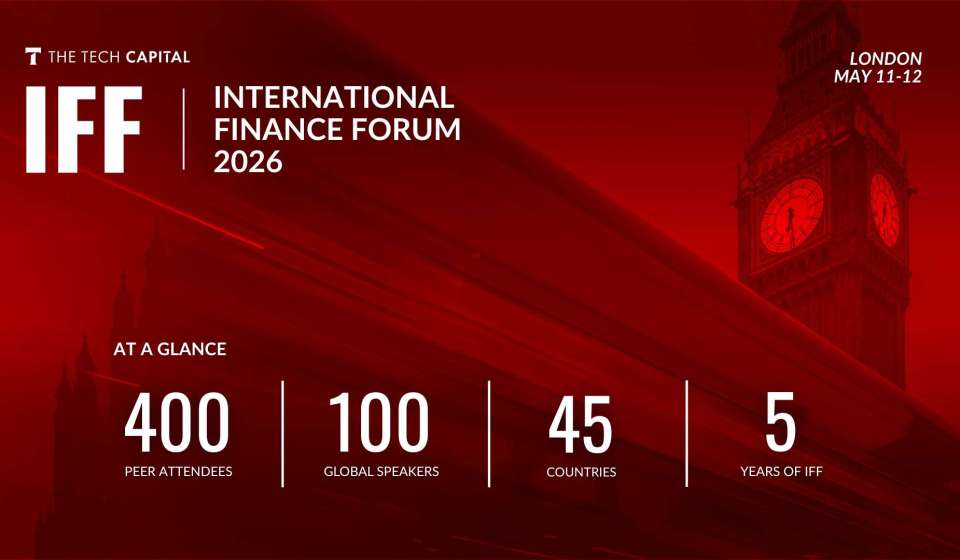
Digital infrastructure investors, operators and advisors will gather in London on May 11-12, 2026, as The Tech Capital International Finance Forum returns at a time of increasing scrutiny across capital deployment, valuation frameworks and execution risk.
Held at One Great George Street, the fifth annual edition of the forum is positioned as a meeting point for decision-makers navigating a market defined less by expansion and more by constraint, recalibration and selective confidence.
More than 400 delegates and over 90 speakers are expected to attend, representing organisations with a combined market capitalisation exceeding US$2 trillion, reflecting the scale of capital engaged in digital infrastructure globally.
Capital allocation enters a more selective phase
The forum takes place against a backdrop of shifting investment dynamics. While demand for digital infrastructure, particularly driven by artificial intelligence, continues to expand, capital is no longer deploying with the same assumptions that defined the past cycle.
Investment committees are increasingly focused on execution risk, delivery timelines and revenue visibility. Energy access, permitting delays and geopolitical exposure are becoming central considerations in underwriting decisions.
The opening session, Capital at a Crossroads, will examine where capital remains active, where it has paused, and how risk is being repriced across the sector. Discussions are expected to focus on how limited partners are adjusting return expectations, concentration limits and pacing strategies in response to a more complex operating environment.
AI demand meets infrastructure reality
A central theme of the London gathering is the tension between accelerating AI demand and the physical constraints required to support it.
While hyperscale and AI cloud platforms continue to drive capacity requirements, the ability to deliver infrastructure at scale is increasingly dependent on power availability, water access and regulatory timelines.
Sessions including Power, Water and Permission: The Physical Limits of AI at Scale will examine how utilities and energy providers are assessing data centre projects and determining which developments receive long-term capacity commitments.
At the same time, procurement strategies among hyperscalers are evolving. Internal constraints around power risk, site selection and delivery timelines are reshaping leasing structures and redefining what constitutes bankable infrastructure capacity.
The forum’s deep-dive discussions on AI infrastructure will explore how demand translates into contracted revenue, where negotiation asymmetry is emerging between buyers and operators, and how inference workloads are changing utilisation assumptions.
Valuation frameworks under pressure
As delivery risk becomes more pronounced, valuation models are being reassessed across the sector.
Historically stable assumptions around utilisation, growth and exit multiples are being tested by changes in hardware cycles, energy availability and customer concentration. The transition from training-led AI expansion to inference-driven deployment is introducing additional uncertainty into long-term revenue projections.
Panels focused on supply, demand and valuation will address how investors are adjusting discount rates and cash-flow assumptions, and whether current pricing adequately reflects real-world delivery constraints.
The shift reflects a broader move towards discipline in capital allocation, with greater emphasis on downside protection and scenario testing.
Capital structures and financing strategies evolve
Changes in risk perception are also influencing how projects are financed.
Debt markets remain active but more selective, with tighter covenants and increased scrutiny on project fundamentals. Private credit is playing a growing role, while hybrid instruments such as preferred equity and structured capital are being deployed to bridge gaps in traditional financing.
Sessions examining capital structures will consider whether existing models remain fit for purpose in a higher-risk environment and how flexibility is being preserved or lost across the capital stack.
The role of public versus private capital will also be addressed, particularly as IPO markets remain uncertain and infrastructure investment continues to rely heavily on private funding sources.
Regional divergence shapes strategy
Differences in energy availability, regulatory frameworks and execution risk are creating divergent investment environments across regions.
Europe continues to face constraints linked to power access and permitting complexity. The United States offers scale but is not immune to rising capital intensity and infrastructure bottlenecks. Asia-Pacific presents strong demand but requires careful assessment of execution risk and regulatory conditions.
The forum’s regional sessions will examine how these factors are influencing capital allocation strategies and whether global platforms are converging or fragmenting their approaches to growth.
Legal and regulatory risk moves to the centre of underwriting
Non-technical risks are becoming increasingly central to investment decisions.
Permitting timelines, grid access and regulatory approvals are now directly affecting project viability, financing structures and valuation outcomes. Legal frameworks are under pressure to keep pace with the speed and scale of capital deployment.
The Legal and Risk Forum, introduced as part of the 2026 programme, will examine how these risks are being identified, priced and mitigated. Topics include time risk, contractual alignment and the allocation of liability in an environment of increasing uncertainty.
Discussions will also address how delays translate into financial impact and where current frameworks fall short in managing cumulative risk across complex infrastructure projects.
A market reassessing M&A and growth strategies
Merger and acquisition activity is also evolving as pricing resets and risk is repriced.
Investors are reassessing asset quality, growth assumptions and exposure to delivery constraints. Deal structures are adapting to reflect increased uncertainty, with greater emphasis on flexibility and downside protection.
The forum’s M&A sessions will examine who is actively acquiring assets, which segments are attracting capital and how strategic positioning is shifting across the market.
Execution risk and capability constraints
Beyond capital and valuation, execution capacity is emerging as a defining factor.
The ability to deliver projects on time and at scale is increasingly constrained by skills shortages, supply chain challenges and organisational capacity. These factors are affecting timelines, operating performance and investor confidence.
Sessions focused on execution risk will examine how these constraints translate into financial outcomes and what capabilities are required to deliver infrastructure in a more complex environment.
A concentrated audience of capital and decision-makers
The International Finance Forum is structured as an executive-level gathering, prioritising depth of discussion and quality of interaction over scale.
Attendees include private equity firms, infrastructure funds, lenders, hyperscale platforms, telecom operators, real estate developers, energy providers and government representatives, reflecting the full spectrum of stakeholders involved in digital infrastructure investment.
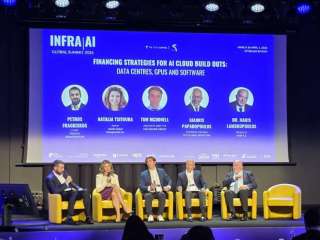
Organisations represented in previous editions include Google, CBRE, KPMG, DigitalBridge, Schneider Electric, Amazon Web Services, BNP Paribas, Citi, Microsoft, Equinix, Brookfield, Blackstone and J.P. Morgan, alongside a wide range of regional and specialist investors, operators and advisors.
The 2026 edition will continue to bring together this cross-section of capital and expertise, creating an environment for direct engagement between investors, operators and counterparties.
London as a focal point for decision-making
London remains a central hub for global infrastructure capital, providing a natural setting for discussions that cut across regions, asset classes and investment strategies.
The forum’s structure, including closed-door roundtables, editorial panels and targeted networking sessions, is designed to facilitate direct, outcome-focused conversations among participants.
The event is held alongside The Tech Capital Global Awards, bringing additional senior stakeholders into the same environment and extending engagement beyond the conference programme.
From discussion to deployment
For participants, the relevance of the forum lies in its timing.
As capital becomes more selective and execution challenges increase, the ability to test assumptions, align strategies and engage directly with peers is becoming more important.
The London gathering provides a setting in which investment decisions can be informed by a broad range of perspectives, reflecting the interconnected nature of capital, energy and infrastructure.
In a market defined by constraint rather than excess, clarity of thinking and discipline in execution are emerging as differentiators. The International Finance Forum positions itself within that context, as a venue for decision-making rather than consensus.
For sponsorship enquiries, contact [email protected] For speaking opportunities, contact [email protected]


 Facebook
 Youtube
  TikTok
 Threads
 WhatsApp